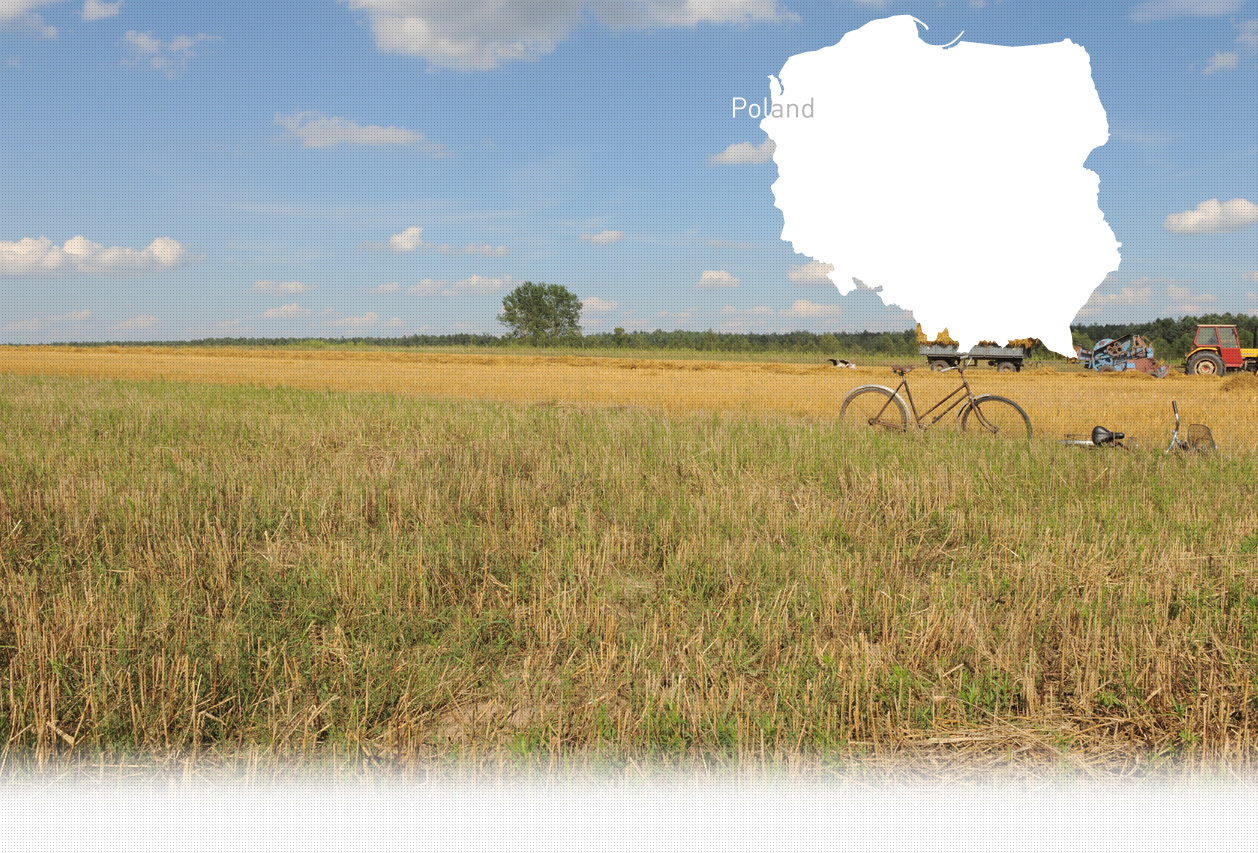
1 Killing site(s)
Antoni B., born in 1910: "When the German occupation started, and the Germans arrived in our village and began hunting for Jews, shouting ’Jude! Jude!’, before taking them away in vehicles. Then, one day, a friend and I ran into some Germans on the road who ordered us to take another route because Jews were being killed. We met up with another boy in a barn and watched the shooting from there, about 600 meters away.
Trucks transported the victims to a ditch, a former Soviet trench that had been widened on German orders. One truck full of Jews would arrive, unload, and as it left, another would pull up, always followed by a car. The truck would stop right at the edge of the pit. The Germans pushed the Jews directly into the ditch and shot them with machine guns. Almost all the German soldiers were shooting. The victims were men, women, and children. They were fully clothed and had some luggage because they believed they were being taken for forced labor. These shootings went on for several days. It happened in summer, after the harvest, and the weather was pleasant." (Witness N°YIU308P, interviewed in Mały Płock, on May 10, 2014)
Court inquiries about executions and mass graves
1. Date and place of execution: forest near Msciwuje village; 1941;
2. Type of execution (shooting, hanging or other): shooting;
3. Personal data of the executed victims (Polish, Jews, other nationalities): Jews;
Number of executed victims: about 4000 people;
Origin of the victims: village of Maly Plock, Stawisk, Kolna and Lomza;
[Deposition of Franciszek B.,45 years old; RG-15.019M Reel#1]
Wacław K.: "As soon as the Germans occupied the Bialystok region in the summer of 1941, they proceeded to shoot the Jewish population near our village. This took place around July 20, 1941. The shootings lasted for about a week, […] they took place in a field, between elevated terrain features that obstructed any further visibility. There were anti-tank ditches there, dug back during the period of Soviet rule. […] As far as I know, the Jews were first brought to the school in the village of Kąty and then taken from the school to be executed. They shot Jews—men, women, and children—from Kolno, Stawiski, Mały Płock, Rutka-Skroda, and other places. The corpses of the murdered were initially covered with sand by the Germans, who then designated farmers from our village for this task." [Archive of the Institute of National Remembrance (AIPN), Main Commission for the Prosecution of Crimes against the Polish Nation, case file ref. no. S 25/67, vol. I, pp. 4–5 (Testimony of witness Wacław K.).]
Mały Płock is a village in Kolno County, Podlaskie Voivodeship, in northeastern Poland. It is the seat of the gmina (administrative district) known as Gmina Mały Płock. It lies approximately 92 km (57 mi) west of the regional capital, Białystok. Before the Second World War, the village was inhabited by Poles, Jews, and ethnic Germans, known as Volksdeutsche. In 1921, Jewish residents made up 8.2% of the total population in Kolno County.
Yahad – In Unum witnesses interviewed in Mały Płock in 2014 recalled that approximately ten Jewish families lived in the village on the eve of the war. They resided near the church, ran local shops, and worked primarily as traders. As there was no synagogue in Mały Płock, the Jewish community gathered to pray in a private home. Local Polish children attended school alongside a small number of Jewish classmates.
From 1939 to 1941, under the terms of the Molotov–Ribbentrop Pact, Mały Płock and the surrounding area fell under Soviet control. This period of Soviet rule lasted until the launch of Operation Barbarossa in June 1941, when German forces re-entered the area.
Beginning on July 20, 1941, the small locality of Mściwuje, situated near Mały Płock, became the killing site for the Jewish population of the surrounding communities, resulting in their near-total destruction. According to findings by the Regional Commission for the Investigation of Nazi Crimes in Białystok, the victims murdered in Mściwuje included approximately 900 able-bodied Jews from Stawiski, over 50 residents of Mały Płock, and Jewish residents of Kolno, primarily women and children as the men from Kolno had been killed earlier in Kolimagi. However, judicial inquiries and postwar testimonies indicate that the total number of victims killed in Mściwuje may have reached around 4,000, including Jews from Mały Płock, Stawiski, Kolno, Łomża and surrounding localities. While postwar Polish investigators initially held German gendarmes from the Stawiski and Kolno posts responsible, most Polish historians now attribute the massacres to an SS unit from the Zichenau Gestapo station in Płock, commanded by SS-Obersturmführer Hermann Schaper.
According to local witnesses interviewed by Yahad - In Unum, the shootings conducted in the anti-tank ditch near Mściwuje lasted for about a week, with Aktions taking place daily, either for full or half days. Historical documentation indicates that while the main, continuous week of daily killings occurred in late July 1941, additional shootings continued into August 1941. Local witnesses recalled that trucks filled with Jewish residents arrived continuously; as soon as one truck unloaded at the edge of the anti-tank ditch and departed, another arrived, consistently followed by a passenger car. Germans standing alongside the vehicles pushed Jewish men, women, and children directly into the ditch. The perpetrators then fired into the pit using submachine guns and handguns. Antoni B., born in 1910, who observed the shooting from approximately 600 meters away, noted that there appeared to be no designated firing squad, as all the Germans present participated in the shooting. After the massacres, local Polish residents were requisitioned to fill in the pit. A chemical liquid was poured over the bodies, burning them and causing the layers in the pit to collapse.
Today, a memorial standing at the killing site in Mściwuje bears the following inscription: "Here lie the ashes of thousands of victims of Hitlerite fascism murdered in the years 1941–1943. Honor to their memory." However, whether this designated memorial area encompasses all of the actual burial sites remains an open question.
Do you have additional information regarding a village that you would like to share with Yahad ?
Please contact us at contact@yahadinunum.org
or by calling Yahad – In Unum at +33 (0) 1 53 20 13 17