


1 Killing site(s)
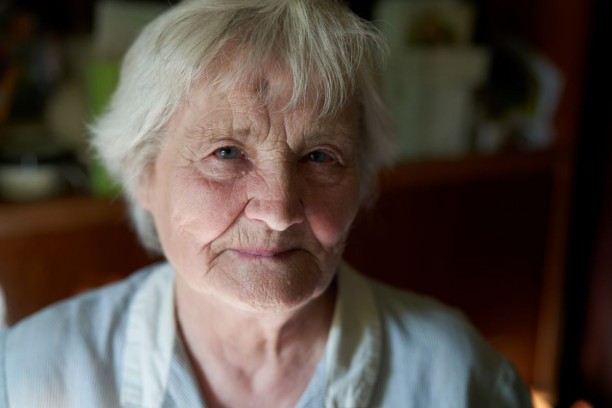
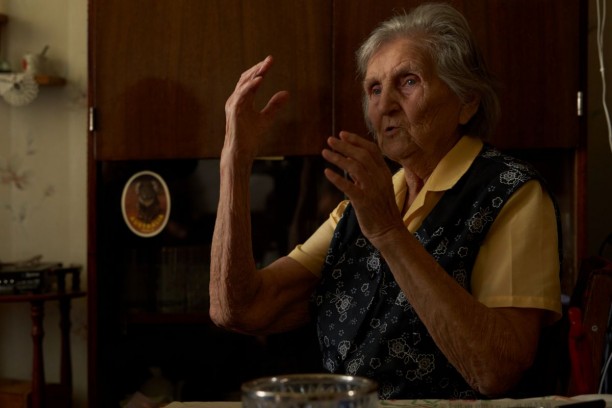
Austra A., born in 1926: "Before the war, Cēsis was a beautiful town with large shops. Many Jews lived on the outskirts of the town, and there were also many Jewish-owned shops in the center. The different communities lived peacefully alongside one another. I remember a Jewish man named Tankel.
During the German occupation, Jews were shot at night near Ninieris Lake. At school, children talked about dogs wandering around the area with human remains in their mouths. I wanted to see the killing site myself, but as I approached, I noticed women’s hair hanging from the trees. Frightened, I turned back and did not go any closer." (Testimony N°YIU117LV, interviewed in Priekuļi, on August 10, 2022)
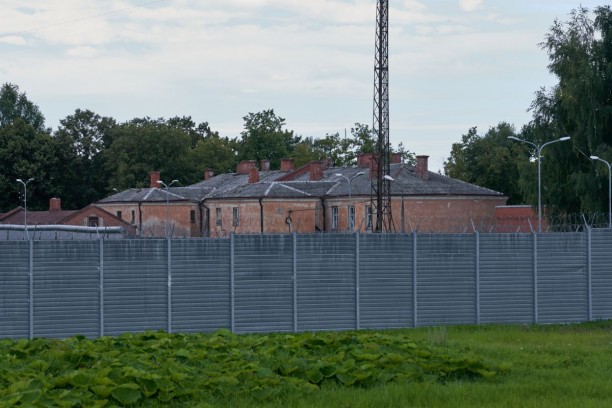
"They [the Germano-fascist invaders] began by exterminating people who had worked in Soviet institutions and enterprises. […] At the Cēsis prison, where male and female citizens and children had been imprisoned by the hundreds, the German barbarians mistreated them; then the German executioners beat many of them and shot them on the spot. The Jews, whom the Germans regarded as inferior to every living creature on Earth, were the object of particular hatred. […]
It was in the execution of the Jews of our uyezd that the Germans, as well as the Germano-Latvian nationalists, their accomplices, showed themselves to be the most inhumane. The mass executions of Jews took place in 1941, near Cēsis, in the forest by Lake Ninery [Ninieris]. It was announced that the Jews were outside the law. Before being shot, the Jews were robbed. Not only adults were shot, but also 32 children." [Act drawn by State Extraordinary Soviet Commission (ChGK), in May 1945, pp. 7-8; GARF 7021-93-118/Copy USHMM RG.22-002M]
"Kroumynch, another witness, stated the following about the mass executions: "Before that bloody night the Germans carried out in the vicinity of Lake Ninery [Ninieris], they took 6–9 people out of my cell, along with their belongings. […] As I later learned from what other detainees said, the day after this execution there was not a single Soviet citizen of Jewish nationality left, whereas there had been more than 300 of them in the prison, or even more. The shooting began in the evening and lasted until 11 p.m. They were executed with rifles, group by group. As for the children, they were thrown alive into a pit prepared in advance." [Act drawn by State Extraordinary Soviet Commission (ChGK); GARF 7021-93-118, pp. 159-161/Copy USHMM RG.22-002M]
Cēsis is situated approximately 87 km (54 mi) northeast of Riga. Jews were permitted to settle in Cēsis and its surrounding area from 1868, when the town was part of the Russian Empire. Over the following decades, a structured Jewish community gradually developed, and by the end of the 19th century the Jewish population of Cēsis had reached 368 individuals. After the First World War, the number of Jews in Cēsis declined considerably; however, following the establishment of an independent Latvian state, the population stabilised. In 1920, the town counted 244 Jewish residents. According to the 1935 national census, 180 Jews lived in Cēsis, representing approximately 2% of the town’s total population. In the same year, a further 105 Jews resided in 19 of the 58 volosts within the Cēsis district.
The Jewish residents of Cēsis were mainly involved in trade and small-scale crafts, selling grocery products, ready-made clothing, hats, footwear, and office supplies. A number of Jews were employed in the healthcare sector. Despite the community’s modest size, the town had both a Jewish cemetery and a prayer house.
During Latvia’s first period of independence, branches of several Jewish organizations operated in Cēsis. These associations promoted engagement with Jewish literature, culture, and Zionist ideas, and helped strengthen a sense of communal identity. The town’s rabbis were Solomon Morein and Leizer Katz, while Motel Berelson served as both cantor and kosher slaughterer (in 1935, he was already a rabbi). According to the rabbi’s report, in 1939, there were 192 people in the Cēsis Jewish congregation.
In 1940, the annexation of Latvia by the Soviet Union marked a turning point for the region’s inhabitants. On June 14, 1941, a number of Jews were deported to Siberia.
The exact number of the Jewish population that remained in Cēsis on the eve of the German occupation remains unknown, but according to local witnesses interviewed by Yahad, there were still numerous Jews living in the town. Only several Jewish families managed to evacuate to the Soviet Union before the German invasion.
Cēsis was occupied by German troops at the beginning of July 1941. The new administration was then established in the town, including a Latvian Self-Defense squad.
Anti-Jewish measures were introduced shortly thereafter, with a number of Jewish residents of the town and its surrounding area, primarily men, being detained in the local prison, from which they were taken daily to carry out forced labor under guard. At the same time, some women, children, and elderly people remained in their homes but were required to wear identifying patches bearing yellow stars.
In early August 1941, the Jews of Cēsis were notified that they were to be relocated and were instructed to prepare their most valuable possessions. Some men were temporarily released from prison to assist their families with packing. Subsequently, all Jews were gathered in the prison courtyard along with their valuables, where they were joined by Jews from the surrounding area. A local resident, Ilga M., born in 1933 and interviewed by Yahad-In Unum, recalled seeing several horse-drawn carts, under guard, carrying Jewish families and their belongings along the road in Cēsis. According to her testimony, the Jews were aware of the fate that awaited them, as they cried and pleaded for help while on the carts.
On August 10, 1941, the Jews gathered in the prison were murdered in the vicinity of Lake Ninieris over the course of the Aktion carried out by the Latvian Self-Defense squad. The victims were transported from the prison to the forest near Lake Ninieris by trucks. Upon arrival, they were shot in groups with automatic weapons into a pit that had been prepared in advance by a group of prisoners. According to Soviet archives, children were thrown alive into a pit. The shooting, that started in the evening and lasted until 11 p.m., claimed the lives of approximately 200 Jews and 50 Latvians, including those who were forced to dig the pits. In 1970, a memorial stone dedicated to the victims of fascist terror was placed at the killing site near Lake Ninieris.
Archival records indicate that further killings of civilians occurred in the Raiskums Forest near Cēsis, including its Strautini section. According to certain reports, a number Jews from the vicinity of Cēsis were also among those killed there.
Do you have additional information regarding a village that you would like to share with Yahad ?
Please contact us at contact@yahadinunum.org
or by calling Yahad – In Unum at +33 (0) 1 53 20 13 17