.jpg&f=jpg)


.jpg&f=jpg)
.jpg&f=jpg)
2 Killing site(s)
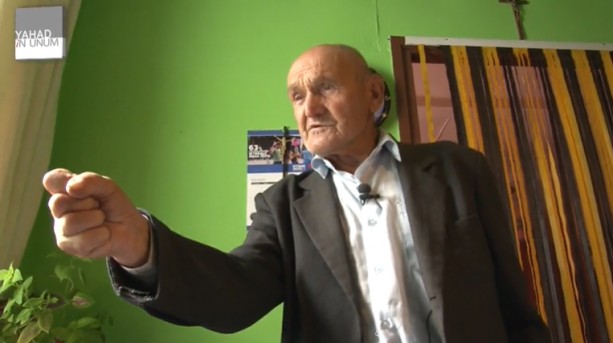
Stanisław K., born in 1932: "Before the war, my family was engaged in farming, mainly cultivating grain and potatoes. A significant Jewish community lived alongside Catholics in Chrzanów at that time. Since the Jewish residents were primarily involved in trade, they often bought our surplus crops. I remember Herszko and Lejba, two traders who were close friends with my father; our families visited each other frequently. I also recall Chaim, a Jewish veterinarian born in 1912.
Before the war, Catholic and Jewish children attended the same school together. The Jewish community used to gather in a building in the center of Chrzanów that served as a house of prayer, and they buried their dead in the cemetery in Goraj, as there was no Jewish cemetery in Chrzanów." (Witness N°YIU737P, interviewed in Chrzanów, on August 23, 2017)
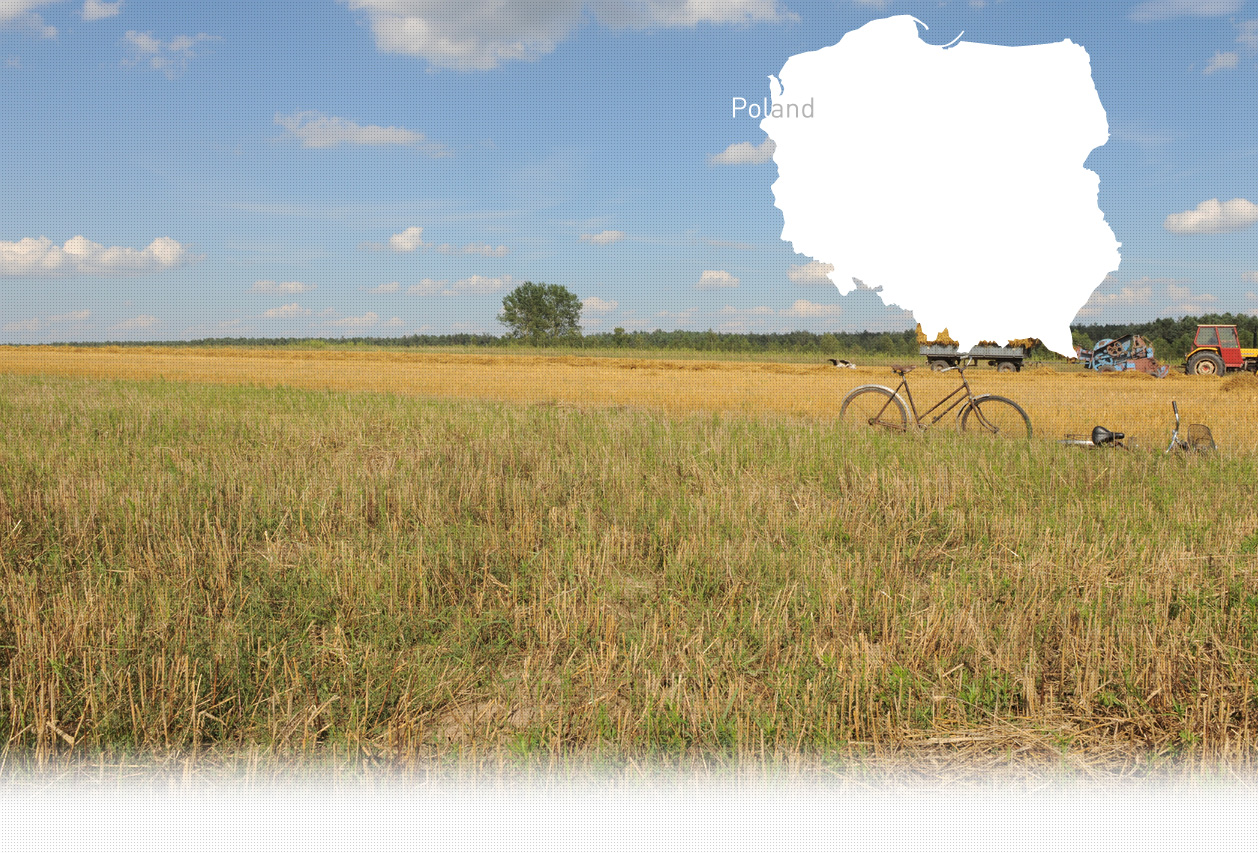
Chrzanów is a village in Janów County, Lublin Voivodeship, in eastern Poland. It is the seat of the gmina (administrative district) called Gmina Chrzanów. It lies approximately 60 km (37 mi) south of the regional capital Lublin and 210 km (130 mi) southeast of Warsaw.
Little is known about the pre-war Jewish community in Chrzanów; however, valuable insights into the daily life of its residents are provided by a testimony of Yahad - In Unum witness Stanisław K., born in 1932. He recalled that before the war his family was engaged in farming, and the local Jewish community lived harmoniously alongside Catholics, primarily trading and often purchasing surplus crops. He remembered his father’s close friendship with traders Herszko and Lejba, as well as the local veterinarian, Chaim, born in 1912. According to his account, the Jews of Chrzanów gathered for prayer in a building in the village center, buried their dead in the nearby cemetery in Goraj due to the lack of a local Jewish cemetery, and Catholic and Jewish children attended the same school together.
The nearest major center of Jewish life in the area was nearby Janów Lubelski. Before the outbreak of the Second World War, the Jewish community in Janów Lubelski numbered around 3,000 residents, accounting for nearly half of the town’s total population. The Jewish population played a vital role in the local economy, specializing in trade, craftsmanship, and the timber industry. The town hosted synagogues, several houses of prayer, and a Hebrew school, with a well-organized Jewish community that provided a rich religious and cultural infrastructure for smaller neighboring villages.
German troops entered Janów Lubelski for the first time in mid-September 1939, shortly after a series of devastating air raids when the Luftwaffe bombed the town on September 8, 13, and 15, destroying approximately 85–92% of it. During this period, the entire Janów district fell under German occupation, including Chrzanów.
Although very few archival documents record the German occupation in Chrzanów itself, an account provided by a local eyewitness interviewed by Yahad - In Unum has made it possible to reconstruct the events of the Holocaust for the town’s Jewish population. Following the establishment of the German occupation administration in the area, anti-Jewish measures were swiftly implemented in Chrzanów. These included the compulsory wearing of identifying armbands and forced labor, such as constructing a dirt causeway across the marshy ground in the village center, which had previously been crossed only by wooden footbridges.
To enforce administrative control, the German authorities required the local Jewish community to appoint their own representatives: a mayor (wójt) and a village headman (sołtys). Chaim, known locally as "Choimek", a veterinarian by profession, was chosen as mayor, while Herszek assumed the role of headman. Shortly after their appointment, both men were summoned by the Germans to the municipal administration building. Following a brief exchange inside, they were escorted approximately 100 meters away by two Germans and shot. Chaim and Herszek became the first Jewish victims of direct execution in Chrzanów; their bodies were subsequently recovered by fellow Jewish residents and transported to the Jewish cemetery in nearby Goraj for burial.
As the occupation progressed, the Jewish population faced complete isolation. The German authorities instituted a strict prohibition against hiding or aiding Jews, enforcing the death penalty against entire Polish families who offered shelter.
Although the precise date of the destruction of Chrzanów’s Jewish population remains unknown, Stanisław K., born in 1932, recalled that it took place in the summer of 1942. The victims were initially gathered and confined in the municipal detention facility, known locally as koza, adjacent to the administration building. From there, they were led away in groups to the killing site in the nearby forest. Stanisław K. observed that the victims, overwhelmed by terror, offered no resistance as they were marched under the guard of just two armed soldiers. When they arrived at the forest, the victims were ordered to deepen the preexisting military trenches before being lined up along the edge and shot. According to the estimations of Stanisław K., between 30 and 40 Jewish people, including men, women, and children, were shot at the site. To this day, this killing site remains un-commemorated.
Do you have additional information regarding a village that you would like to share with Yahad ?
Please contact us at contact@yahadinunum.org
or by calling Yahad – In Unum at +33 (0) 1 53 20 13 17