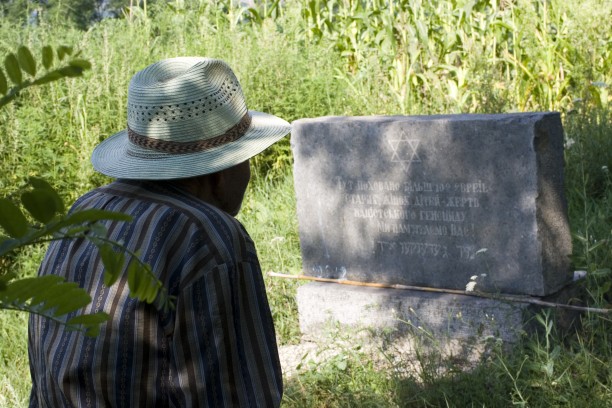
3 Killing site(s)
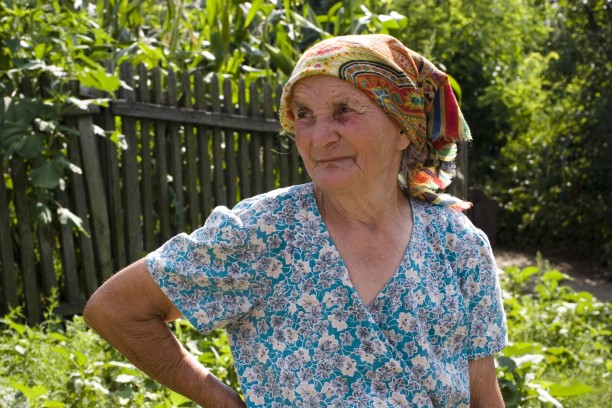
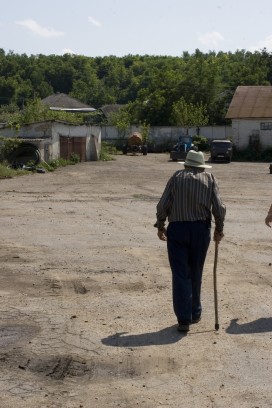
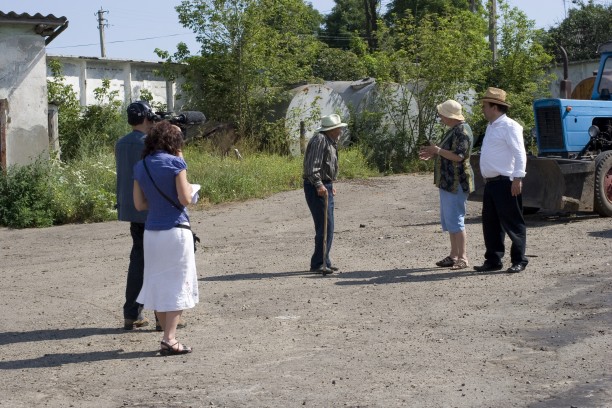
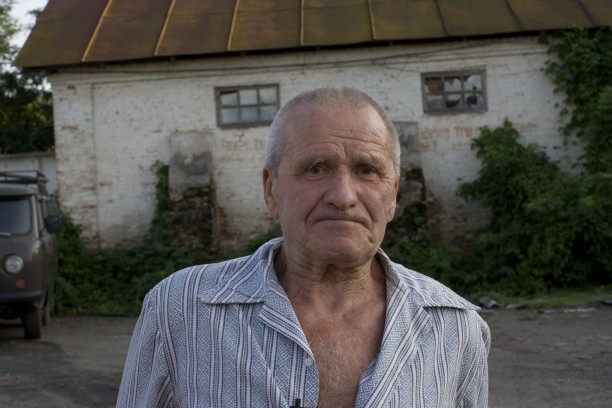
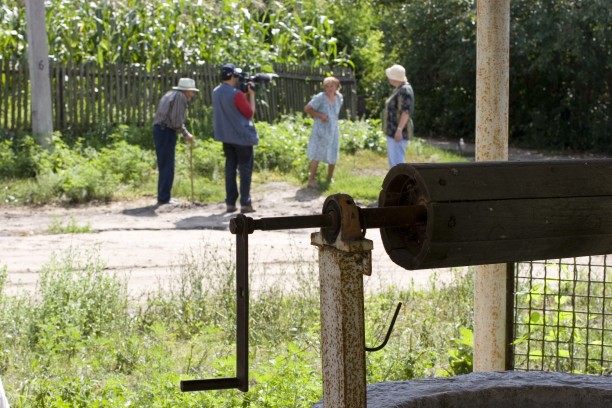
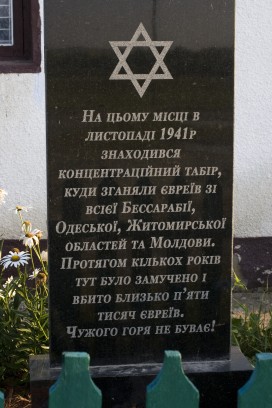
Nina Kh., born in 1937: "We are standing in front of my childhood home, and right there, just opposite, there is a well. During the war, this well was on the outskirts of the camp. Jewish people would go there regularly for water. Some of them took a risk and would secretly leave the camp to come to our house and ask for food. Whenever my mother had something, she would give it to them. I remember a little girl who came to our house one day. She said to my mother, “Madam, please take me as your daughter. I’ll be good.” She was about my age, around four or five years old. I told my mother that I’d be delighted to have a sister, but my mother said to me, “If we take her in, they will certainly kill Mama.” And the little girl went back. Romanian guards saw her outside the camp and killed her. They beat her to death with their batons. It was horrible." (Testimony N°YIU1256U, interviewed in Hvozdavka Druha, on July 28, 2011)
" […] Yevgeny Onisimovich Daniliuk, an employee of the Yasinovo hospital, states that in November 1941, a concentration camp for civilians was opened in the village of Hvozdavka II, Liubashivka District. This camp was organized by a Romanian, the executioner Vasilica.
Arrested civilians, including men, women, and children, were brought to this camp. Upon arrival, they were lined up, all their belongings were confiscated, and they were counted by striking every tenth person on the head with a stick. he camp was guarded by intoxicated policemen who fired randomly and without warning.
The inmates were kept in the open air, exposed to rain and snow. Epidemics and starvation raged inside the camp. Furthermore, the Romanian authorities forbade providing any medical care whatsoever to the sick detainees.
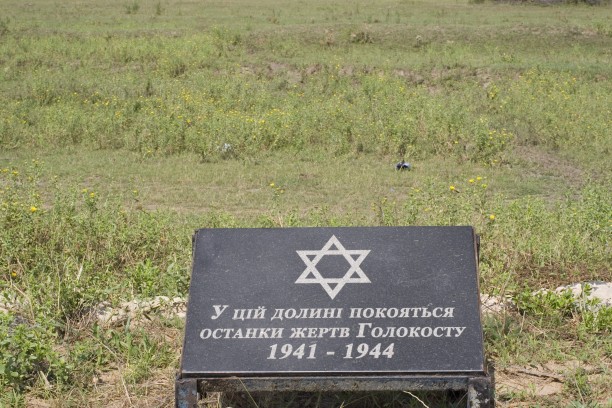
The victims of the epidemics were buried in Hvozdavka II, above the river, with the intent of spreading the epidemics among the civilian population. This resulted in typhus epidemics; at least 2,000 people were buried in these pits. When the bodies of those who died of typhus were being buried, many living people asked for water to drink; they were struck on the head with rifle butts and buried alive. […]" [Act No. 1 drawn by State Extraordinary Soviet Commission (ChGK), on May 10, 1944, p.45; GARF 7021-69-79/Copy USHMM RG.22-002M]
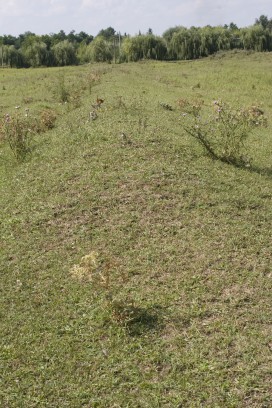
"We, the undersigned, the Commission of Inquiry for the Liubashevka District […], carried out excavations in the anti-tank ditch located in the village of Gvozdavka II, Liubashevka District, Odesa Region. The ditch was opened in two places along a length of 40 meters, and 247 bodies were exhumed from it. These excavations demonstrated that 2,208 bodies were buried in this anti-tank ditch. The executions took place during the winter of 1941 and the beginning of 1942. […]" [Act No. 2 drawn by State Extraordinary Soviet Commission (ChGK), on May 6, 1944, p.3; GARF 7021-69-79/Copy USHMM RG.22-002M]
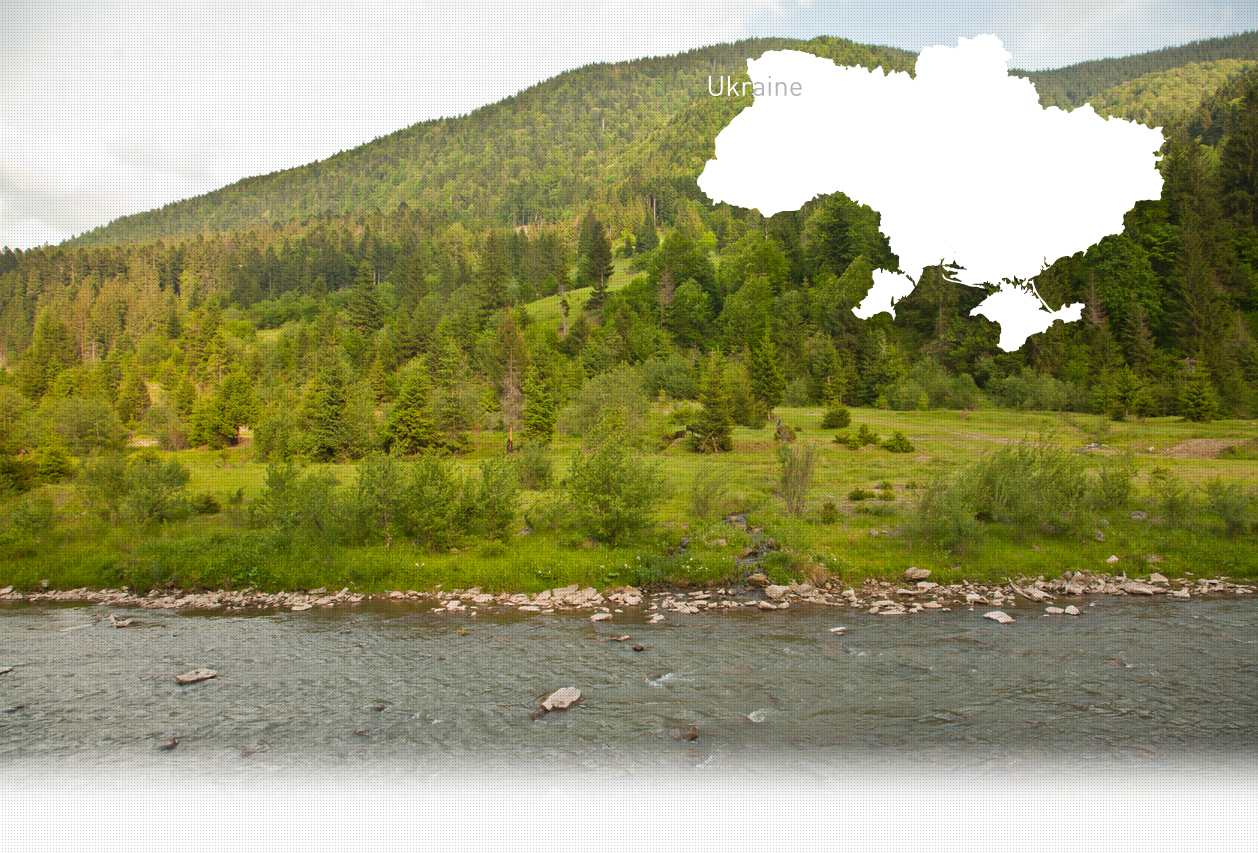
Hvozdavka Druha is a village in the Podilsk District of the Odesa Region. The village is located approximately 73 km (45 mi) east of Podilsk and 12 km (7.5 mi) southwest of Liubashivka.
The first historical record of the village dates back to 1792. The village is known in historical sources under several names: Gvozdovka, Gvozdovka Vtoraya, Grozdovka, Grosdovca, Vazdovca, and Vasdovka.
Historical sources do not allow us to determine the exact number of Jews residing in Hvozdavka II prior to 1941. Nevertheless, according to The Gazetteer of the Pale, the village belonged to the historical territory of the Pale of Settlement. Unlike neighboring Liubashivka, Hvozdavka was not a heavily institutionalized Jewish shtetl, though a small Jewish presence in the village is attested.
Hvozdavka was occupied by German and Romanian forces at the end of July 1941, after which the Romanian authorities took over the administration of the settlement.
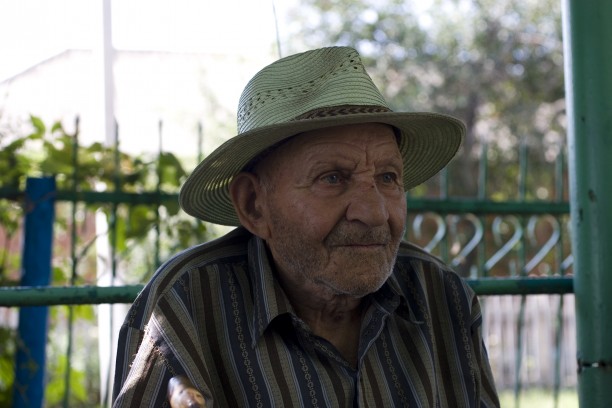
A transit camp was created in Hvozdavka during the autumn of 1941 to temporarily hold thousands of Jewish deportees before their transfer to major killing centers and camps in the Golta district, including Bohdanivka and Domanivka. Convoys of Romanian Jews deported from across Bessarabia, notably from Chisinau and Balti, as well as Ukrainian Jews from the Balta and Ananiv districts, were forced to march on foot to the site. Upon arrival, the deportees were held within the kolkhoz, the village collective farm, specifically inside a wheat warehouse. Given the small size of the structure and the vast number of people, many could not find shelter indoors and slept outside. Parfeny B., born in 1922, and interviewed by Yahad, recalled that many Jews slept outside directly on the ground, in the rain and cold, including entire families with men, women, children, and pregnant women. Some researchers estimate that the number of detainees at the site had already reached approximately 15,000 by October 1941.
Living conditions in the camp were marked by exposure, severe famine, and widespread disease, notably a typhus epidemic. Jewish detainees were forbidden from working and survived entirely through bartering. According to Ivan K., born in 1926, the camp inmates were initially able to purchase small quantities of food from the Romanian gendarmes in exchange for clothes and jewelry. However, once the victims were stripped of their remaining valuables, the Romanian authorities halted all food provisions, leaving the Jews to rely solely on local villagers who risked punishment for bringing them meager provisions. According to Ivan, "an immense number died of hunger." Historians estimate that at least 2,000 Jews perished from cold, starvation, or illness. Parfeny observed the bodies of deceased adults and children lying on the camp grounds nearly every day. Local men who owned horse-drawn carts were requisitioned by the Romanian primar (mayor) to move the bodies to an anti-tank ditch outside the village. As the ditch was exceptionally long, mass burials took place at multiple locations along its length.
Witnesses interviewed by Yahad also reported frequent acts of violence and murder committed by Romanian forces. Parfeny repeatedly witnessed Jews being beaten by Romanian gendarmes with whips through the perimeter fence, noting that "some died, others were killed." Nina Kh., born in 1937, who lived directly opposite the site, witnessed the murder of a little Jewish girl who was beaten to death by Romanian gendarmes for daring to step outside the camp perimeter.
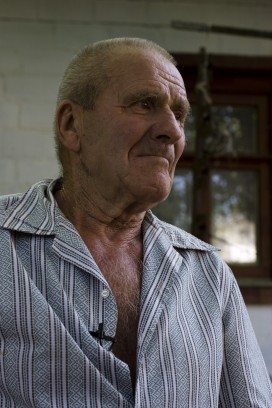
The Hvozdavka camp was liquidated in late 1941, and the remaining detainees were force-marched to the Bogdanivka camp. Ivan K. recalls that after the camp was cleared, authorities claimed the Jews had merely been relocated. However, villagers later learned that at least a portion of them had been shot and buried in an anti-tank ditch in a nearby forest roughly 4 km outside the village. According to Ivan K., human remains and personal belongings were subsequently discovered at the killing site. During final liquidation of the Hvozdavka camp, a small group of Jewish specialists and artisans was spared execution and transferred to the nearby Liubashivka camp.
Historical sources differ regarding the exact number of victims who died or were murdered in Hvozdavka. While most sources estimate the number of victims at 5,000, some range as high as 8,000 or 10,000.
Do you have additional information regarding a village that you would like to share with Yahad ?
Please contact us at contact@yahadinunum.org
or by calling Yahad – In Unum at +33 (0) 1 53 20 13 17