
1 Killing site(s)
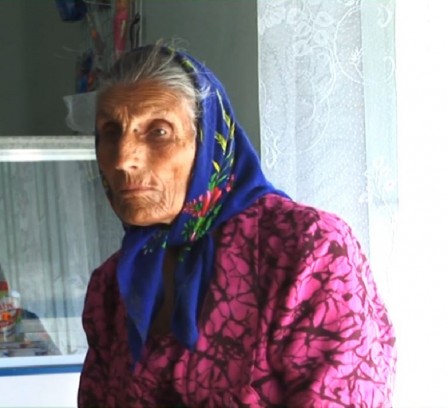
Lidia K., born in 1933: "I remember that the Jews who had been brought from elsewhere were kept for several weeks in different buildings in the village—the club, the school, and the sheepfold. Among them were men, women, children, and elderly people. Some were allowed to leave the place where they were being held and came to the villagers to barter clothing for food.
After a few weeks, the Romanians gathered all of these Jews at the edge of the village and led them toward a ravine. There, Germans were waiting for them. The Jews were forced to undress, lined up in groups facing the pit, and shot in the back. The shooting only lasted a few hours.
I watched it from a distance of about 150 to 200 meters. If we tried to get closer, we were driven away. Afterward, two carts filled with hemp were brought and unloaded onto the bodies. Fuel was poured over them, and they were set on fire. The bodies burned for three days. The smell was unbearable.
For several years after that, when it rained and the water washed away the soil in the ravine, people could find gold teeth or pieces of jewelry at that place." (Testimony N°YIU354U, interviewed in Novovoskresenka on July 25, 2006)
"[…] In December 1941, German gendarmes brought 220 persons of Jewish nationality from Odessa to Novo-Voskresenka [now Novovoskresenka]. At the end of February, I no longer remember the exact date, German colonists arrived and took all the Jews outside Novo-Voskressenka and shot them. Their bodies were piled up and burned. […]" [Deposition of Stepan Ivanovich Serebriany, born in 1889, given to State Extraordinary Soviet Commission (ChGK) on June 17, 1944; pp. 412–413; GARF 7021-68-178/Copy USHMM RG.22-002M]
"[…] In December 1941, the German gendarmerie brought 220 or 240 persons of Jewish nationality from Odessa to Novo-Voskressenka and locked them in a stable and in the cinema building. The premises were very cold and were never heated. They were guarded by the German gendarmerie, which allowed no one to leave and forbade others to pass food to the Jews. At the end of February 1942, German colonists arrived and took the Jews outside Novo-Voskressenka and began shooting them. The shootings were carried out as follows: the Jews were taken one after another and shot. The German colonists took all their valuables and appropriated them for themselves. […]" [Deposition of Dmitri Vasilievich Khomenko, born in 1889, given to State Extraordinary Soviet Commission (ChGK) on June 17, 1944; pp. 414–415; GARF 7021-68-178/Copy USHMM RG.22-002M]
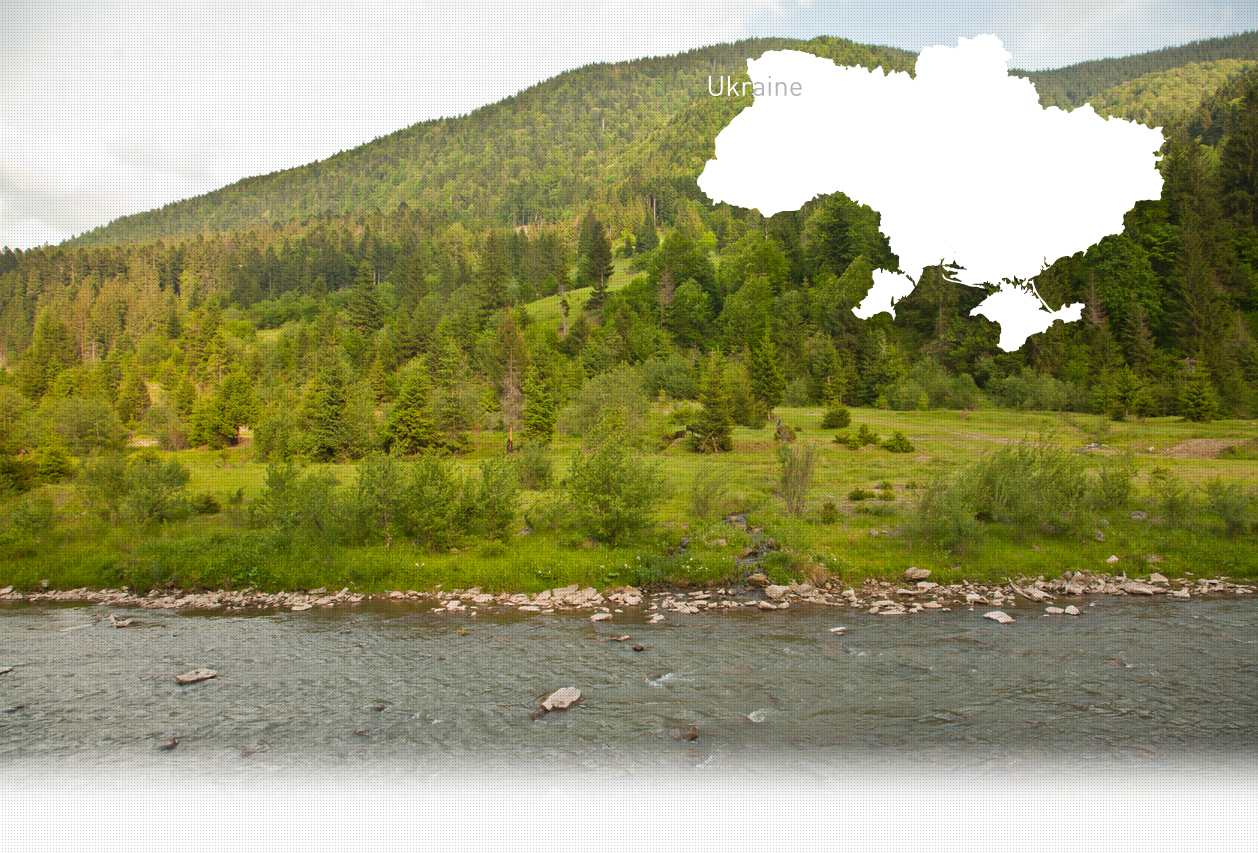
Novovoskresenka is a rural village in southern Ukraine. Administratively, it is part of the Veselynove territorial community in Voznesensk district, Mykolaiv Region, located approximately 37 km (22 mi) from the town of Voznesensk. The village lies within the southern Ukrainian steppe, a region incorporated into the Russian Empire in the late 18th century.
During the late 18th and especially the 19th centuries, this territory underwent extensive state-sponsored colonization and agricultural development. Numerous rural settlements were founded as part of imperial policies aimed at cultivating and economically integrating newly acquired lands. The broader area around Voznesensk was characterized by a multiethnic rural landscape. Alongside Ukrainian villages, it included Jewish and German agricultural colonies established primarily in the 19th century under imperial initiatives. These settlers played a significant role in regional agricultural development.
At present, no reliable documentary evidence confirms the existence of a distinct Jewish community in Novovoskresenka itself prior to the Second World War. The village does not appear in major reference works or databases as a recognized Jewish agricultural colony or as a locality with a documented prewar Jewish population. Given the broader regional context, where Jewish agricultural colonies and mixed rural settlements existed, it remains possible that a small number of Jewish families resided in the village and were integrated into the local rural population.
Novovoskresenka was occupied by German troops on August 12, 1941. Following the establishment of the Transnistria Governorate on August 19, 1941, the village was transferred to Romanian civil administration. Owing to its location near the Southern Bug River—then the frontier between the Romanian-administered Transnistria Governorate and the German-administered Reichskommissariat Ukraine—the village remained a sensitive border zone and experienced the active presence and coordination of both occupation authorities.
Archival documents indicate that in December 1941, between 220 and 240 Jews were deported from Odesa to Novovoskresenka by the German gendarmerie. The deportees were confined in unheated buildings, including a stable and a cinema, under strict guard. They were forbidden to leave, and local residents were prohibited from providing them with food.
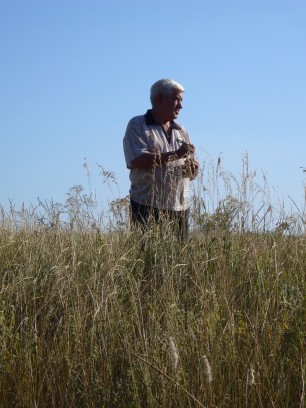
Testimonies collected by Yahad - In Unum corroborate this information. Lidia K., born in 1933, recalled that the deported Jews—men, women, children, and elderly people—were held for several weeks in various village buildings, including the club, the school, and a sheepfold. She stated that some detainees occasionally attempted to barter clothing for food with local inhabitants. Mykola T., born in 1931, likewise testified: “Jews, mostly from Odesa, were brought here in winter. The winter was very harsh; many died on the way. The others were distributed among different villages such as Buzovarove, Novyi Step, Ivanivka, and Novovoskresenka. They were housed in stables, barns, and other available buildings.”
At the end of February 1942, German colonists arrived in the village. The Jewish detainees were taken outside Novovoskresenka to a ravine. According to local testimonies, Romanian forces gathered and escorted the Jews to the killing site, where Germans were waiting. Upon arrival, the victims were forced to undress, arranged in groups facing a pit, and shot from behind. The Aktion lasted several hours. Lidia K. observed the shooting from a distance of approximately 150–200 meters and recalled that bystanders were driven away if they attempted to approach. Mykola T. further stated: “It was not Germans from Germany who killed them, but ‘colonist’ Germans—Volksdeutsche—who lived notably in Rostadt.”
After the shooting, the bodies were covered with hemp brought in carts, doused with fuel, and set on fire. According to witnesses, the bodies burned for three days. In subsequent years, erosion of the ravine reportedly exposed human remains and personal items, including gold teeth and pieces of jewelry.
To date, no memorial has been erected at the killing site to commemorate the Jewish victims.
Do you have additional information regarding a village that you would like to share with Yahad ?
Please contact us at contact@yahadinunum.org
or by calling Yahad – In Unum at +33 (0) 1 53 20 13 17