



1 Killing site(s)
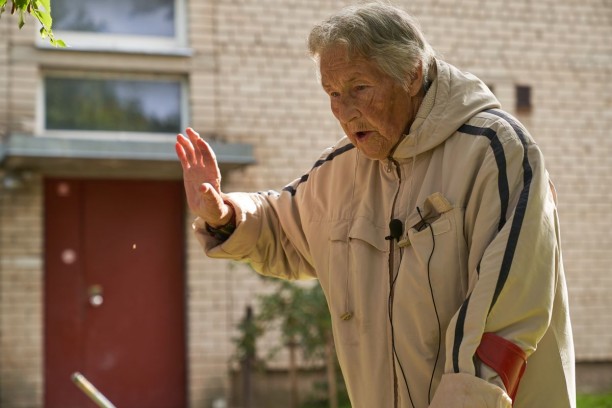
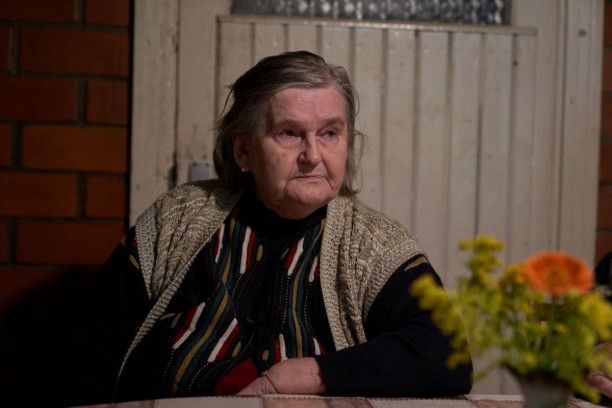
Agrita F., born in 1936: "My grandparents lived in Talsi, and I moved there shortly after my mother died in 1941, by which time the town was already under German occupation. I lived with two of my father’s sisters. I remember the Jews of Talsi well. My father, who worked as a forester, knew many of them and always said that they were honest and kind people. Most of them were shop owners or street vendors. All of them were killed during the German occupation." (Testimony N°YIU80LV, interviewed in Talsi, on September 6, 2021)
"The investigation established the following: At the end of July 1941, German-fascist occupiers and their accomplices, Latvian-German nationalists, […] under guard by armed Schutzmannschaft personnel, brought 60 Jewish women and children to the territory of Stende Parish, where they were placed in the ‘Maz-Makšeniski’ estate. Another 60 Jewish men were brought there and placed in the ‘Diž-Makšeniski’ estate.
They were housed in old barns that were completely unfit for habitation, where they lived for 15 days, after which they were transported by vehicle to a forest and all were shot.
At the site of the execution, two graves were discovered: one measuring 7 meters in length, the other 6 meters, each with a width of 2 meters. This execution site is located on the territory of Stende Parish, along the road leading from Stende Station to [the village of] Renda, near the Līči railway station, at a distance of approximately 2–2.5 km. Thus, the questioned witness, F. M. Brevlavsky, […] recounted the following regarding this execution:
"While living on the ‘Maz-Makšeniski’ estate in Stenden Parish, I do not recall the exact date in July 1941 when Jewish women and their small children were brought by the police to my estate and placed in an old barn—about 60 people in total. While living in the barn on my estate, they were assigned by the police to perform various kinds of work. At the ‘Diž-Makšeniski’ estate of my neighbor, Jānis Zaverts, about 60 Jewish men were likewise kept in a barn. They were also driven by the police to work clearing forest materials. These Jews were fed very poorly, as small Jewish children often ran to my house asking for bread and milk.
In such harsh conditions, they lived for more than half a month in my barn, after which, approximately at the end of June [July] 1941, they—that is, 60 women and children and 60 men—were taken to a forest and shot. The executions took place in a forest near ‘Mazrunki’ Estate, 2–3 km from Līči Station."
Similar testimonies confirming this execution of 120 civilian persons were given by the questioned witnesses: [followed by a list of witnesses’ names].
According to the established witnesses’ testimonies, 120 men, women, and children of Jewish nationality were executed in the two graves described above." [Notice on the German-fascist atrocities committed on the territory of Stenden Parish, Talsi District, drawn by State Extraordinary Soviet Commission (ChGK), on June 9, 1945; GARF 7021-93-130, pp. 293-294; /Copy USHMM RG.22-002M]
Ruņķi is located approximately 15 km (9.3 mi) southwest of Talsi and 10 km (6.2 mi) west of Stende. There is no available evidence of a permanent Jewish presence in Ruņķi itself. According to the 1935 census, however, 11 Jews lived in Stende Parish, including five in the town of Stende, while 499 Jews—about 12% of the total population—resided in Talsi, where a Jewish community had developed by the mid-19th century.
During the interwar period, Talsi was home to two synagogues, a prayer house, a Jewish cemetery, and a six-year Jewish primary school. The Jewish community was primarily engaged in commerce and various artisanal trades, operating 41% of the town’s 146 higher-level businesses. Community institutions included a Chevra Kadisha(burial society), a Jewish mortgage and savings society, and a potato starch factory. Jewish-owned stores sold imported merchandise and a wide variety of goods. Some Jewish residents were also active in the medical sector, including the physician Moses Sachs and the dentist David Fuchs. The town’s last rabbi was Boruch Zelik Levenberg. The Zionist movement played an increasingly important role both in Talsi and in the surrounding area.
In 1940, the annexation of Latvia by the Soviet Union marked a turning point for the region’s inhabitants, leading to the nationalization of private businesses and the closure of community institutions. In mid-June 1941, a number of Jewish families were deported to the interior of Russia.
The exact number of Jews remaining in Talsi and Stende on the eve of the German occupation is unknown. However, numerous Jewish families were still living in Talsi at that time. Only a small number managed to evacuate to the interior of the Soviet Union before the German invasion.
Ruņķi, as well as the surrounding area of Stende Parish and Talsi, were occupied by German troops at the beginning of July 1941.
According to archival sources, in July 1941 approximately 120 Jews, presumably from Stende Parish and the town of Talsi, were brought under armed guard by Schutzmanns to the vicinity of Ruņķi. 60 Jewish women and children were then housed in barns at the Maz-Makšeniski estate, while 60 Jewish men were placed in barns at the nearby Diž-Makšeniski estate. For approximately two weeks, the prisoners were subjected to various forms of forced labor. This included 12 Jews who worked at the breeding station in Stende and 20 Jewish men who were assigned to clear timber at a sawmill located near the Līči railway station. In order to distinguish the Jewish workers from others, distinctive yellow patches were sewn onto their chests and backs.
At the end of July 1941, all Jewish prisoners were transported to a nearby forest located along the road linking Līči and Mordanga, where they were shot. The Aktion was carried out by Latvian policemen and Germans. Jewish men were transported first by truck to the killing site, where they were shot and buried in a pit that had been dug in advance. Subsequently, Jewish women and children were taken to the same location, where they were shot and buried in a second pit. A local witness, Dzidra K., born in 1937 and interviewed by Yahad–In Unum, recalled seeing closed trucks heading toward the forest and hearing the shots shortly thereafter.
According to available sources, the remains of the victims originally buried in separate pits near the village of Ruņķi were later reburied together at a site along the road to Mordanga. In 2008, the Council of Jewish Communities of Latvia erected a memorial at this reburial site, marked with a Star of David, in remembrance of the 120 Jews from Talsi and Stende who were murdered in July 1941 by Nazi forces and their collaborators.
Do you have additional information regarding a village that you would like to share with Yahad ?
Please contact us at contact@yahadinunum.org
or by calling Yahad – In Unum at +33 (0) 1 53 20 13 17