





2 Killing site(s)
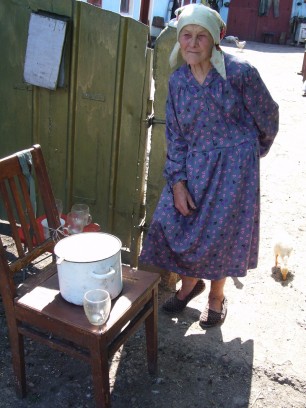
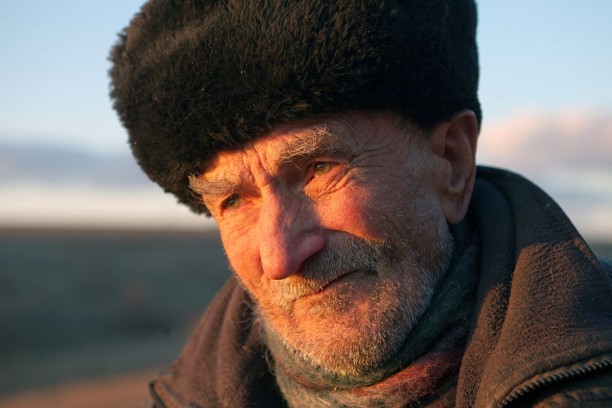
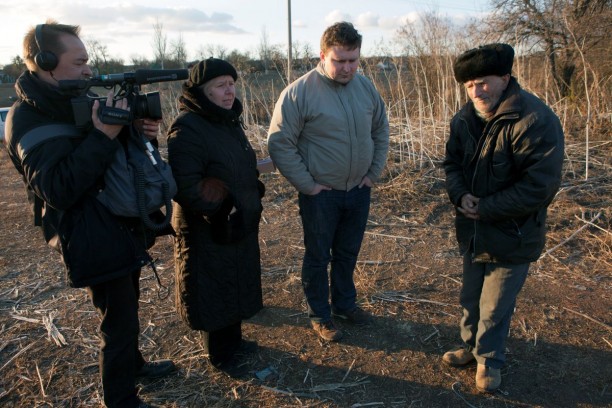
Valentyna P., born in 1934: "I saw the Jews who were brought here, to Stepanivka. I also know that other Jews were taken to Podolianka, a village about 3 km from here.
They were kept in stables and slept on the ground. There were two buildings standing perpendicular to each other, and people were locked inside. Guards were posted so no one could leave and no one could enter, not even to bring food. The windows had iron bars. Some villagers still tried to pass things through the bars, a little soup or scraps of food.
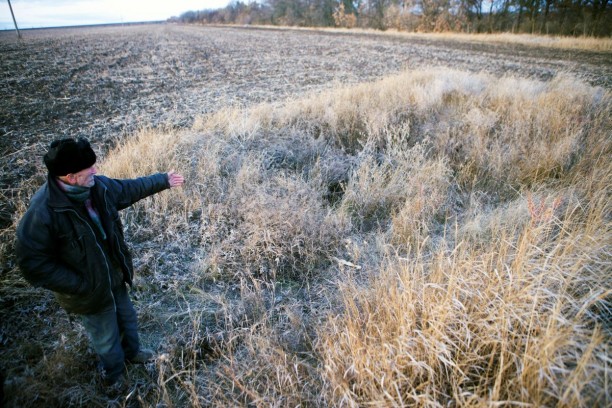
They stayed there for about two months. Many died from the cold, exhaustion, and illness. The ones who died before the execution were buried in a beet storage pit. The landscape has changed since then; today the place is overgrown with grass. I think it was the head of the village who ordered them buried there. This happened several times, because people kept dying from hunger and cold.
The others were loaded onto carts, taken away, shot, and thrown into a well. It was winter, terribly cold. The well was very deep. The shooting lasted two days. On the first day they killed the Jews from our village. On the second day they killed those from Podolianka.
One young Jewish girl survived. She had fallen on top of the bodies inside the well and managed to climb out. She ran to a neighboring village and was hidden there. She survived the war. From time to time, she still comes back to visit the people who saved her." (Testimony N°YIU342U, interviewed Stepanivka, on July 24, 2006)
"[…] On February 20, 1942, occupation authorities deported approximately 1,150 Jewish civilians from the city of Odesa to the territory of the Ochakovskoye [today Ochakivske] village council. Upon arrival, the deportees were confined in livestock enclosures dispersed across several surrounding villages. Detention conditions were deliberately inhumane: guards were ordered to prevent detainees from leaving the premises and to deny them access to food and water. As a result of exposure, starvation, and mistreatment, numerous prisoners died during confinement.
Subsequently, under the false pretext of transfer for agricultural labor at a state farm (sovkhoz), the surviving detainees were escorted to the Mostovoye (today Mostove) railway siding. There, the entire group was executed by shooting. The bodies were disposed of in a deep well. Following the execution, the perpetrators poured flammable liquid over the victims and set the remains on fire. Wounded individuals and children who had survived the shooting were thrown into the flames." [Act N°5 drawn by State Extraordinary Soviet Commission (ChGK), on June 21, 1944, pp.455-456; GARF 7021-68-178/Copy USHMM RG.22-002M]
"[…] During the period of German–Romanian occupation, on February 20, 1942, approximately one thousand Jewish civilians—including a large number of children aged between one and fourteen, as well as many elderly persons—were rounded up by occupation authorities.
The detainees were confined in agricultural buildings and barns located in the villages of Podolianka, Sukhaya Balka (today Sukha Balka), and Stepanovka. They were held under strict guard and denied both freedom of movement and access to food. As a consequence of starvation, exposure, and mistreatment, numerous detainees perished during confinement.
Approximately three days later, the surviving prisoners were transported to the Mostovoye (today Mostove) railway siding. There, they were executed by shooting. The bodies of the victims were disposed of in a well approximately 18 meters deep. Once the well had been filled, the perpetrators poured flammable liquid over the remains and set them on fire in an effort to destroy evidence of the crime […]." [Deposition of Yulia Ivanovna Kiviatkovskaya, born in 1913, given to State Extraordinary Soviet Commission (ChGK) on June 20, 1944; pp. 458-459; GARF 7021-68-178/Copy USHMMRG.22-002M]
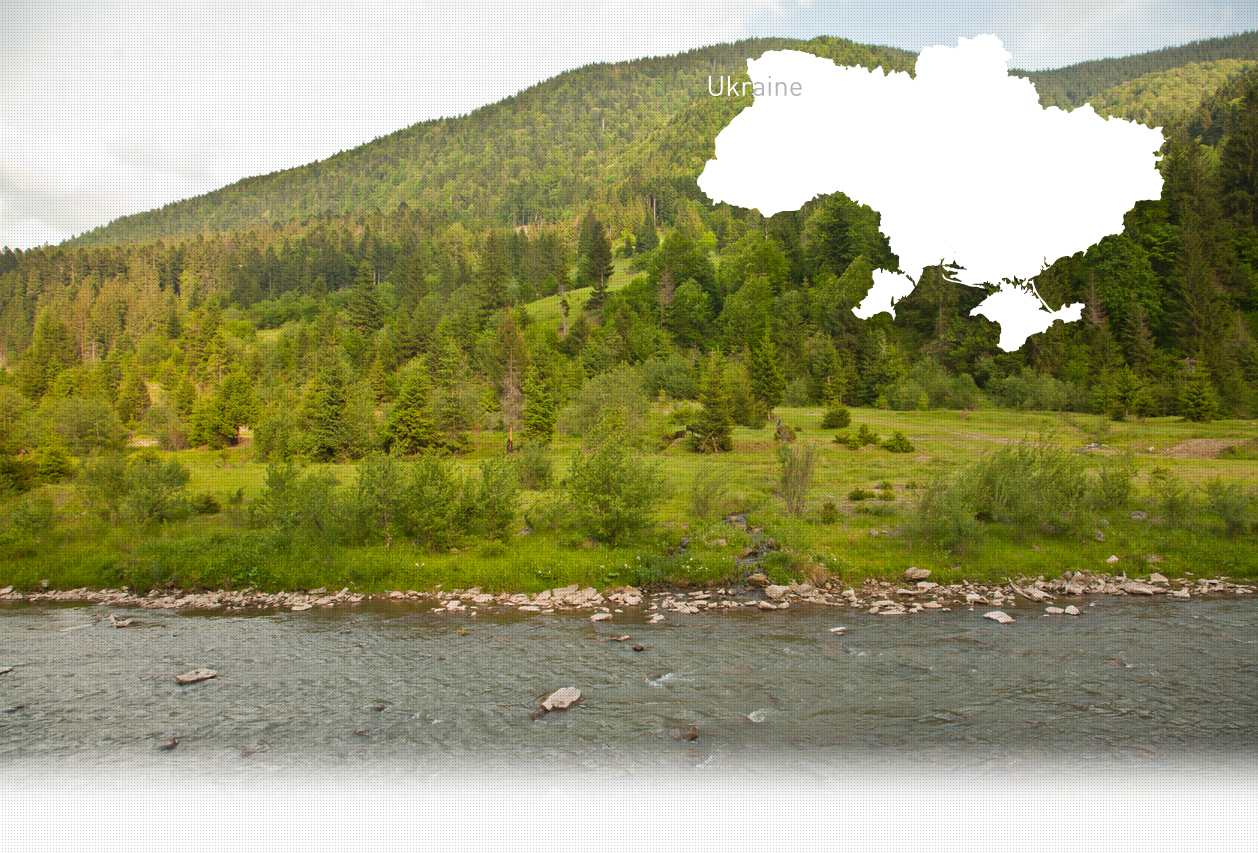
Stepanivka is a village located in the Mykolaiv region of southern Ukraine, approximately 18 km (11 mi) from the town of Voznesensk.
The village was founded in the late nineteenth century during the agricultural colonization of the southern steppe territories of the Russian Empire. Until 1917, Stepanivka formed part of the Kherson Governorate of the Russian Empire. Following the establishment of Soviet rule, it was incorporated into the Ukrainian Soviet Socialist Republic in 1922 as part of the Union of Soviet Socialist Republics (USSR).
No documented evidence indicates the existence of an established Jewish community in Stepanivka prior to the Second World War, either in available census records or in the recollections of local inhabitants interviewed by Yahad - In Unum.
The village of Stepanivka, like other localities in the district, was occupied by German and Romanian forces in August 1941.
Archival sources indicate that on February 20, 1942, more than 1,000 Jews deported from Odesa were confined in barns and stables across the villages of Podolianka, Sukha Balka, and Stepanivka. Many perished in the days that followed. Although some local residents provided food or exchanged provisions for valuables, numerous detainees died from extreme cold and starvation. According to Valentina P., born in 1934, the bodies of those who died during this period were buried by requisitioned villagers in a beet storage pit in Stepanivka.
While archival documents state that the remaining Jews were executed at a well three days after their arrival, testimonies collected from witnesses in Stepanivka and Podolianka describe a longer period of detention. These accounts indicate that the victims were held for several weeks to more than two months before the mass shooting, which likely occurred in late February 1942.
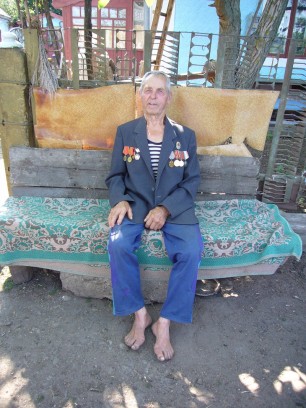
Following this period of detention, approximately 1,000 surviving detainees, including women, children, and elderly persons, were escorted in groups under armed guard, under the pretext of transfer to forced labor, to an 18-meter-deep well located between the villages of Stepanivka, Podolianka, and Mostove. Oleksandr M., born in 1924, who witnessed the events, stated that while most victims were taken to the site on foot, those unable to walk were transported by cart. Upon arrival, some victims surrendered their valuables after being falsely promised that their lives would be spared. All were then brought in groups to the edge of the well and shot. The Aktion was carried out by Volksdeutsche (ethnic Germans) from nearby colonies, including Lunacharsky. After the shooting, the bodies, including those of wounded victims, were burned in the well in order to conceal the crime.
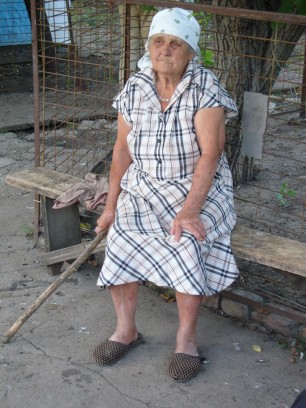
Testimonies from local witnesses indicate that the killings did not occur in a single operation but followed a staged process. According to Valentyna P., the Jews held in Stepanivka were murdered first, followed the next day by detainees from Podolianka. Nina U., born in 1926, further reported that the killings of those detained in Sukha Balka took place over several weeks. Her account suggests that Sukha Balka served as a temporary detention site, where groups of Jews were held for several days to a week before being transported to the well for execution. After each group was killed, new deportees were brought to the village.
As of today, both killing sites in Stepanivka remain unprotected.
After the war, several German colonists from the Lunacharsky agricultural colony were tried during the Mykolaiv Trial. Oleksandr M., interviewed by Yahad - In Unum, testified there as a witness.
Do you have additional information regarding a village that you would like to share with Yahad ?
Please contact us at contact@yahadinunum.org
or by calling Yahad – In Unum at +33 (0) 1 53 20 13 17