



1 Killing site(s)
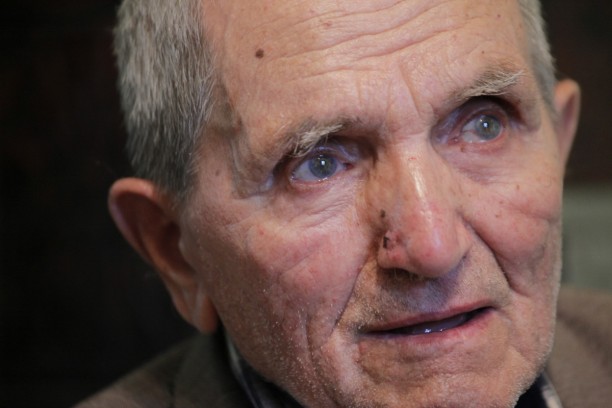
Petro I., born in 1925: "In September 1942, I moved to Stryi and began studying at the gymnasium. I lived nearby and passed by the ghetto every day. By that point, all the Jews in town had been gathered there. It was an entire neighborhood, mostly inhabited by fairly poor Jewish families; wealthier Jews who had lived elsewhere were forced to move into the ghetto as well.
The ghetto was surrounded by a fence with a single entrance guarded by police. A Judenrat and a Jewish police force had been established inside. The Jewish policemen wore armbands and carried rubber batons. From the gymnasium windows, I could see ghetto residents approach the entrance to buy food brought by peasants. However, I do not believe they were permitted to leave the ghetto.
There were several Aktions conducted in the ghetto. Trucks entered, loaded Jews onto them, and drove away. We later learned that they were taken to be shot. The trucks were open, and you could see the Jews packed tightly together, sitting on top of one another, unable to move. These were entire families. Even from a distance, you could recognize the women by the scarves on their heads.
When no Aktions were taking place, life inside the ghetto was invisible from the outside. The windows and doors facing the square were sealed, and the only entrances were on the inside of the ghetto. All I could see was people coming and going at the gate and the occasional truck entering. But I knew that behind those walls, families lived in constant fear of the next Aktion." (Testimony N°YIU2995, interviewed in Nezhukhiv, on November 18, 2021)
"During the German Nazi occupation, I lived in Stryi. […] On August 26, 1941, the commander of the troops who arrived that day in Stryi issued an order requiring Jews to wear the Star of David on an armband on their right sleeve. Following this order, around September 1, while Jews were still living throughout the city, the first Aktion to destroy them took place. Led by three Gestapo agents from Drogobych, Ukrainian police officers arrested 830 people, mostly men. They were taken to Golobutov and shot.
After the first Aktion, everything remained calm until the ghetto was created, beginning on February 15, 1942 (or possibly January) and lasting until August 15. The ghetto was established by a special order that specified exactly which streets Jews were required to occupy, while residents of other nationalities were ordered to vacate them. Once the ghetto was formed […] it was headed by Hutterer, with Mischel as his deputy and Schindler as the secretary— all of them Jewish. Inside the ghetto there was a post office, a market, and other institutions that served to completely isolate the Jews from the rest of the population.
After the ghetto was established, a second Aktion took place. It lasted three days—September 3, 4, and 5, 1942. According to local sources, approximately 5,000 people were arrested and sent by train to Bełżec in groups of 150 per car. The third Aktion occurred on October 17 and 18, 1942, during which 4,000 to 5,000 people were arrested. The fourth Aktion took place on November 15, 1942, and about 1,300 people were arrested.
After this Aktion, everything remained calm until February 28, 1943. No further Aktions were conducted. This was due to the need to reduce the size of the ghetto as fewer and fewer Jews remained, and because it was also necessary to resettle Jews living in nearby towns such as Skole, Khodoriv, Zhydachiv, Zhuravno, Bolekhiv, and Mykolaiv. Only after this process was the fifth Aktion organized on February 28, 1943, resulting in the deaths of about 3,000 people. The sixth Aktion took place on May 20, 1943. It lasted only one day, during which nearly 3,000 people were exterminated.
There were also Aktions carried out at the hospital, meaning that sick Jews were killed while being treated there. The executions took place in Golobutovo, at the Jewish cemetery, and at the Jewish hospital. I received this information from Hutterer, the head of the Jewish Council, who knew how many people had been rounded up. The Gestapo from Drogobych led all the Aktions, but the final liquidation Aktion—during which I was caught—was carried out by the head of the Stryi Gestapo. […]
The last Aktion began on June 5 with the liquidation of the ghetto. During this Aktion, the leaders Hutterer, Mischel, and Schindler were killed near the gates of the Jewish Council. I was rounded up on June 5 and held in a cell with 75 others without food until the 7th. On the 7th, we were transported to a forest in Golobutovo, where the massacre took place. Only Germans were shooting. First, they shot the adults; then they began killing the children. […] …I escaped. […]" [Interrogation report of witness Heinrich Arnoldovich Wolfinger, born in 1903. Jewish. No criminal record. Drawn by State Extraordinary Soviet Commission (ChGK), on December 14, 1944. GARF 7021-58-21, pp. 131–135 / Copy USHMM RG.22-002M.]
"[…] In September 1941, the Germans arrested 120 Jews. Two priests came to see me and asked me to go to the Gestapo to request their release, as they were innocent. I went to the Gestapo and said that I would vouch for each of them if they had done anything wrong. The Gestapo told me not to get involved, otherwise next time I would find myself in their place. Subsequently, those who had been arrested were taken out of the city and shot. […]" [Interrogation report of witness Lishtchinski Nikolai Konstantinovich, born in 1881. Priest. Drawn by State Extraordinary Soviet Commission (ChGK), on December 11, 1944. GARF 7021-58-21, p. 143 / Copy USHMM RG.22-002M.]
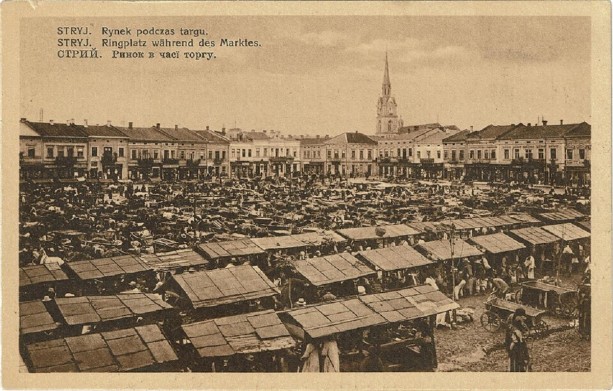
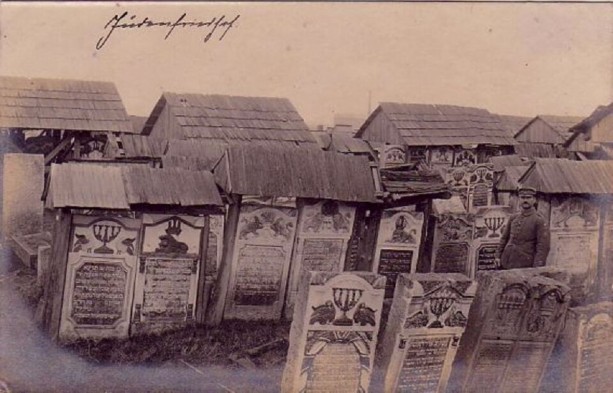
"[…] I know where the executions took place; there are several sites in Stryi. I can mention Goloboutino, the Jewish cemeteries—both the new and the old ones—the Jewish hospital, and the ghetto itself, between the houses, which was visible from the market square, and on the market square as well […]" [Interrogation report of witness Khavliuk Mykhailo Ivanovych, born in 1899. Ukrainian. Orthodox priest. No criminal record. Drawn by State Extraordinary Soviet Commission (ChGK), on December 13, 1944. GARF 7021-58-21 p.139/Copy USHMM RG.22-002M]
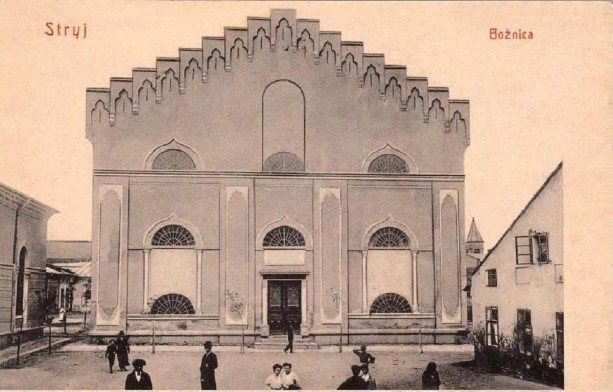
Stryi is a city in the Lviv region, located approximately 65 km (40 mi) south of Lviv. First mentioned in 1385, Stryi has a long and well-documented Jewish history, with Jewish presence recorded as early as 1563. In the 17th century, Jews gained increasing rights, including the right to acquire land for trading honey and alcoholic beverages, and to build their first synagogue in 1660. By the end of the 17th century, Jews had been granted equal rights with other residents of the city. They traded in horses and salt, brewed beer, and raised livestock.
Stryi belonged to the Polish-Lithuanian Commonwealth and subsequently to the Austrian Empire from 1772 to 1918. The ban on wine trade and land rental in the 1820s led to a rise in Jewish craftsmanship, with tailors, bakers, and other artisans becoming increasingly prominent. In the 19th century, Jews established woodworking factories, a foundry, a soap factory, a match factory, a Jewish hospital, and a Jewish trade union. Jewish children attended the city’s secondary schools.
During the Russian army’s occupation of the town during the First World War, Jews were persecuted in 1914 and 1915. Shortly afterward, they formed self-defense associations, created their own newspaper, and held a Jewish national assembly in the city. When the city became part of Poland again in 1919, Jewish schools and political groups were re-established, and numerous Jewish organizations operated in Stryi. Over the centuries, the town developed into a vibrant regional hub of Jewish religious, commercial, and cultural life.
Population records reflect this evolution. In 1662, Stryi had 1,448 inhabitants, of whom 4.8% were Jewish. By 1910 and 1939, however, the Jewish community had become one of the largest in eastern Galicia. In 1910, Stryi had 30,942 residents, of whom 34.6% were Jewish, 33.8% Polish, and 29.2% Ukrainian. Its numerous synagogues, prayer houses, educational institutions, and communal organizations attracted Jews from surrounding villages—including Holobutiv—who relied on Stryi for religious services, commerce, and formal education. Despite the community’s prominence, widespread poverty led many Jews to emigrate to North America during the 1920s.
Stryi was occupied by the Germans in September 1939. Following the Molotov–Ribbentrop Pact, however, the territory came under Soviet control. During this period, hundreds of Jewish refugees from the west arrived in the town. At that time, out of 34,000 inhabitants, 35.6% were Jewish. The Soviets quickly banned private property and nationalized local businesses. Some Jewish activists, as well as former business owners and Jewish refugees from Poland, were deported for allegedly resisting the Soviet regime.
In 1941, Stryi’s Jewish community numbered around 12,000 individuals, making it one of the major Jewish centers in the region. Just before the Germans arrived, the Soviets imprisoned and murdered a number of Ukrainian and Polish political opponents in the Stryi prison.
Stryi was occupied by German troops on July 3, 1941. By that time, nearly 300 local Jews had managed to evacuate to the east. The discovery of the bodies of 150 prisoners killed by the NKVD served as a pretext for a German-encouraged pogrom, during which 350 Jews were murdered, and many others were looted by Ukrainians and Poles. Around July 10, eleven more Jews and one Ukrainian were killed by the Germans near Hrabovets.
Shortly afterward, a Judenrat (Jewish Council) and a Jewish Police force were established. Anti-Jewish measures—such as the requirement to wear white armbands with the Star of David, restrictions on movement, and forced labor—were imposed on the Jews of Stryi. Petro M., born in 1928 and interviewed by Yahad in 2012, recalled seeing 20 to 30 Jews forced to work for about a month. The Germans also compelled local residents, including Petro, to transport gravestones from the Jewish cemetery to the road, where Jews had to break and crush them to repair the Stryi–Drohobych road.
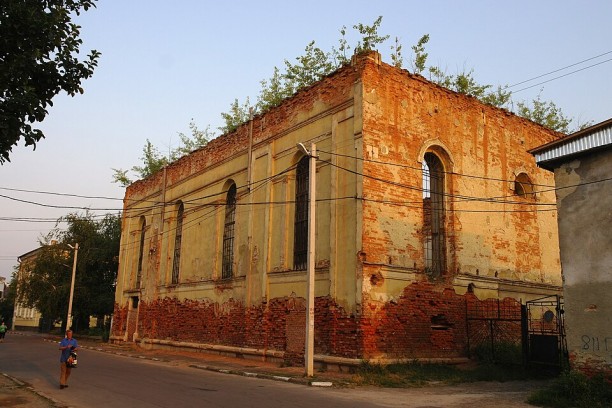
In August 1941, a German civil administration took control of Stryi. Around September 1, 1941, approximately 1,000 Jews were arrested and held for three days in the house of prayer and in the courtyard of the Ukrainian police before being transferred to the municipal prison, where a number of detainees died from torture. On September 15, 1941 (or September 22–23, the day of Rosh Hashanah, according to other sources), the first mass killing Aktion took place in the Holobutiv Forest. It was carried out by German SD soldiers, assisted by Ukrainian policemen. On that day, between 830 and 1,000 Jews detained in the prison were loaded onto trucks and taken to the forest, where they were shot.
The creation of the Stryi ghetto began at the end of 1941, but ghettoization was gradual. For a long time, non-Jewish residents could still enter to go to the market. It was only in July 1942 that all Jews were forced to move in, while hospital staff and certain craftsmen were still allowed to live outside. Jews from nearby villages, including Holobutiv and Nezhukhiv, were also relocated there. The ghetto occupied an entire neighborhood and was surrounded by a fence. Witnesses interviewed by Yahad recalled seeing Jewish inmates bartering or buying food at the entrance, Some, like Mykhailo I., born in 1923, secretly entered to deliver food in exchange for shoes or clothing. The ghetto had a hospital and five soup kitchens, but extreme overcrowding, hunger, cold, typhus, and the confiscation of furs caused many deaths. In spring 1942, several hundred Jews were killed by the Security Police, assisted by the Schupo and Ukrainian policemen. By June 1942, around 9,700 Jews remained in Stryi, most in the ghetto, with about 4,000 employed.
In the fall of 1942, four deportation Aktions to the Bełżec killing center were organized in Stryi by the Border Police office in Drohobycz. The first took place on September 3, when 3,000 Jews were arrested and deported to Bełżec; during this roundup, 400 Jews were killed in the town. In September and October 1942, several hundred Jews from nearby communities were transferred to Stryi. Deportations to Bełżec continued with 1,487 Jews deported on October 17–18; 800 Jews on October 21–24; and 1,200 Jews on November 15–16.
Following the deportations, the ghetto was sealed, confining 4,000 to 5,000 remaining inmates, most of whom would die or be murdered in 1943 by the Security Police and SD, assisted by the Ukrainian Auxiliary Police. In January 1943, patients at the Jewish hospital were murdered. From February 28 to March 2 or 3, nearly 1,000 Jews—mostly women, children, and the elderly—were taken to the Holobutiv Forest and killed. On May 22, over 1,000 Jews were shot at the Jewish cemetery in Stryi. The ghetto was finally liquidated between June 3 and 7, 1943, when nearly 3,000 people were shot in the Holobutiv Forest. Jews found in hiding were taken to the Jewish cemetery and murdered.
From late 1942 until the summer of 1943, three labor camps for Jews operated in Stryi. In early July 1943, a few dozen Jews hiding nearby managed to slip into the A.S.A. camp. When the camp commander learned of this, he carried out a selection. Anyone not officially registered or missing the “W” mark on their clothing was handed over to the German municipal police, loaded onto trucks, and murdered at the Jewish cemetery. The camps were liquidated on June 22, 1943. Most prisoners were shot on July 13–14 and August 25–26. Some victims were shot in the camp while trying to escape, and several hundred others were taken to the Jewish cemetery, where Kripo officers and city police shot them. About 70 prisoners were transferred to Drohobych.
Between 1941 and 1944, more than 13,000 people perished in Stryi and its surroundings. Nearly 2,000 of these victims were killed in Stryi itself, including more than a thousand Jews and several hundred others shot during multiple Aktions at the old and new Jewish cemeteries; about 350 killed during a pogrom; and several hundred murdered at the Jewish hospital and during ghetto raids. In addition, roughly 6,487 Jews were deported to the Bełżec killing center, and nearly 5,000 were shot in the Holobutiv Forest.
In addition to Jewish victims, partisans, communist sympathizers, and prisoners of war were also killed in Stryi during the German occupation.
Stryi was liberated on April 5, 1944. Only a few Jews—those who had managed to hide or had been evacuated—returned to Stryi after the war.
For more information about the killing of Jews in Holobutiv please follow the corresponding profile.
Do you have additional information regarding a village that you would like to share with Yahad ?
Please contact us at contact@yahadinunum.org
or by calling Yahad – In Unum at +33 (0) 1 53 20 13 17