
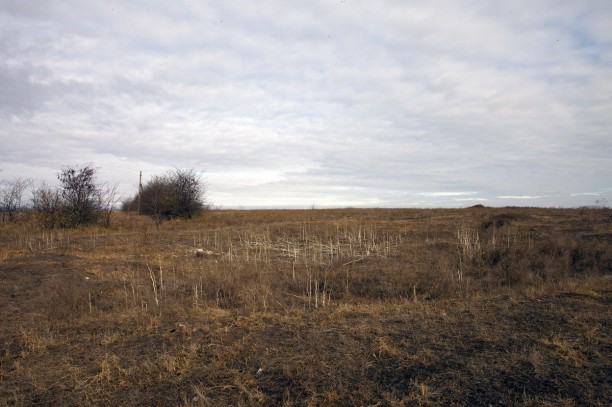
1 Killing site(s)
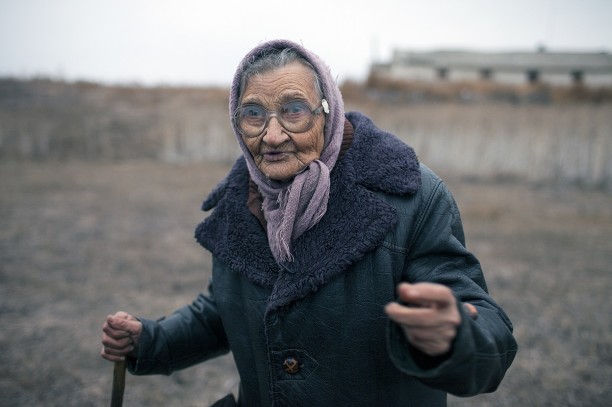
Volodymyr V., born in 1932: "It was winter, and it was very cold, when Jews from Odesa were brought here. They were mostly women, children, and elderly people. They were starving, didn’t have any warm clothes, and many had frostbite. It was terrible.
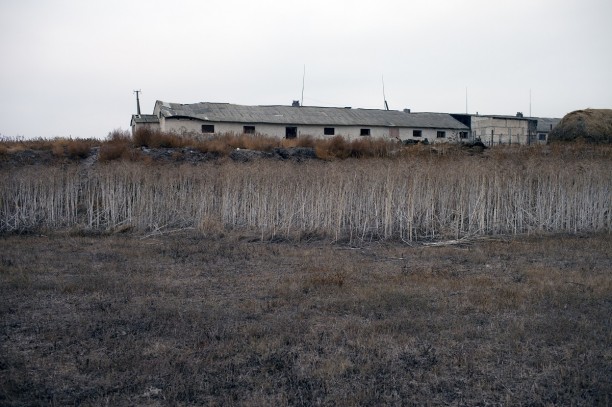
Our house was right next to the sheepfold where some of them were locked up. There were so many that others were kept in the former school building and in a barn. Some were also housed with villagers.
There was a Jewish woman who was a doctor with them. I don’t know how she managed to leave the place where they were being held, but she came to our house with her daughter to treat my sick father. I went to the sheepfold to bring them food. If the police saw us, they chased us away. The village head ordered the young people to bring hay into the sheepfold so the Jews could sleep on it. This went on for several weeks, maybe a month.
On the eve of the shooting, the head of the kolkhoz came to warn my father that policemen would soon be checking houses to see whether anyone was hiding Jews. He told us to be careful and not to hide anyone, because otherwise we would be shot as well.
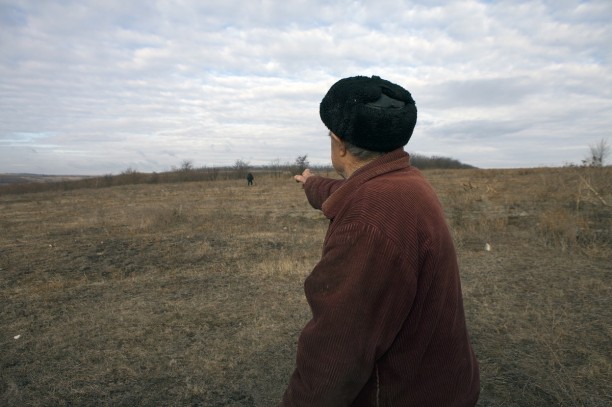
After that, the Germans arrived. They ordered the policemen to gather all the Jews in front of the sheepfold and take them to the ravine, where they were shot in the livestock pit belonging to the kolkhoz. The pit was about 19 meters deep.
I saw the Jews being lined up at the edge of the pit and shot in the back. The pit was round. Five or six Jews were placed at the edge at a time and shot. We were hiding about 40 meters away, and we heard the individual shots—they were using rifles." (Testimony N°YIU1322U, interviewed in Dmytrivka, on November 15, 2011)
"[…] On 26 December 1941, the Romanian gendarmerie, led by Plutonier K. and his deputy, [illegible], brought 800 civilians from Odessa to Pokrovskoïe [today Pokrovka]. They were Jews, including many teachers and physicians, women with children and infants, and pregnant women, who, despite the severe cold, were confined in an unheated hospital. They received neither food nor water and were subjected daily to torture, beaten with whips, sticks, and rifle butts, which caused the deaths of more than 200 people. Those who remained alive were transferred to Dmitrovka [today Dmytrivka] (7 km from Pokrovskoïe), where they were shot in March 1942. During the execution, they were placed at the edge of a large, deep ravine in which hemp soaked with gasoline was burning and were fired upon with automatic weapons. The dead and the wounded fell into the flames. As for the children, some were poisoned and thrown into the pit, while others were thrown in alive in front of their mothers. […]" [Act N°2 drawn by State Extraordinary Soviet Commission (ChGK), on June 17, 1944; p.364-365; GARF 7021-68-178/Copy USHMM RG.22-002M]
"[…] On 25 or 26 December 1941, the German gendarmerie brought 800 civilians of Jewish nationality from Odesa. Most of them were women with young children, but there were also two medical doctors and four physicians whose names I do not know. Their clothes were torn, they bore traces of beatings, they were emaciated, and their faces as well as the extremities of their hands and feet were frostbitten, as at that time of year it was already very cold and there was much snow. They were all locked up in the hospital, which had no heating. They were given no food. All of this caused many deaths. Those who remained alive were beaten daily with whips, sticks, and rifle butts. These atrocities lasted for about one month, after which the survivors were taken to the village of Dmitrovka, Veselynove District [today Voznesensk District], Mykolaiv Region, where they were locked in a small shed.
Then, at the beginning of February 1942, they began to be shot. The execution was carried out in the following manner: gasoline was poured over hemp that had been prepared in advance in an existing ravine and set alight. Then the [Jews] were brought by families toward the fire and shot with automatic weapons. The dead and the wounded fell into the ravine and burned. In most cases, the children were thrown alive into the fire in front of their parents. In addition, infants were murdered with some poison; after their death, which occurred immediately, they were burned in the same ravine. […]" [Deposition of Anisim Danilovich Lannik, born in 1893, given to State Extraordinary Soviet Commission (ChGK) on June 15, 1944; pp. 374–375; GARF 7021-68-178/Copy USHMM RG.22-002M]
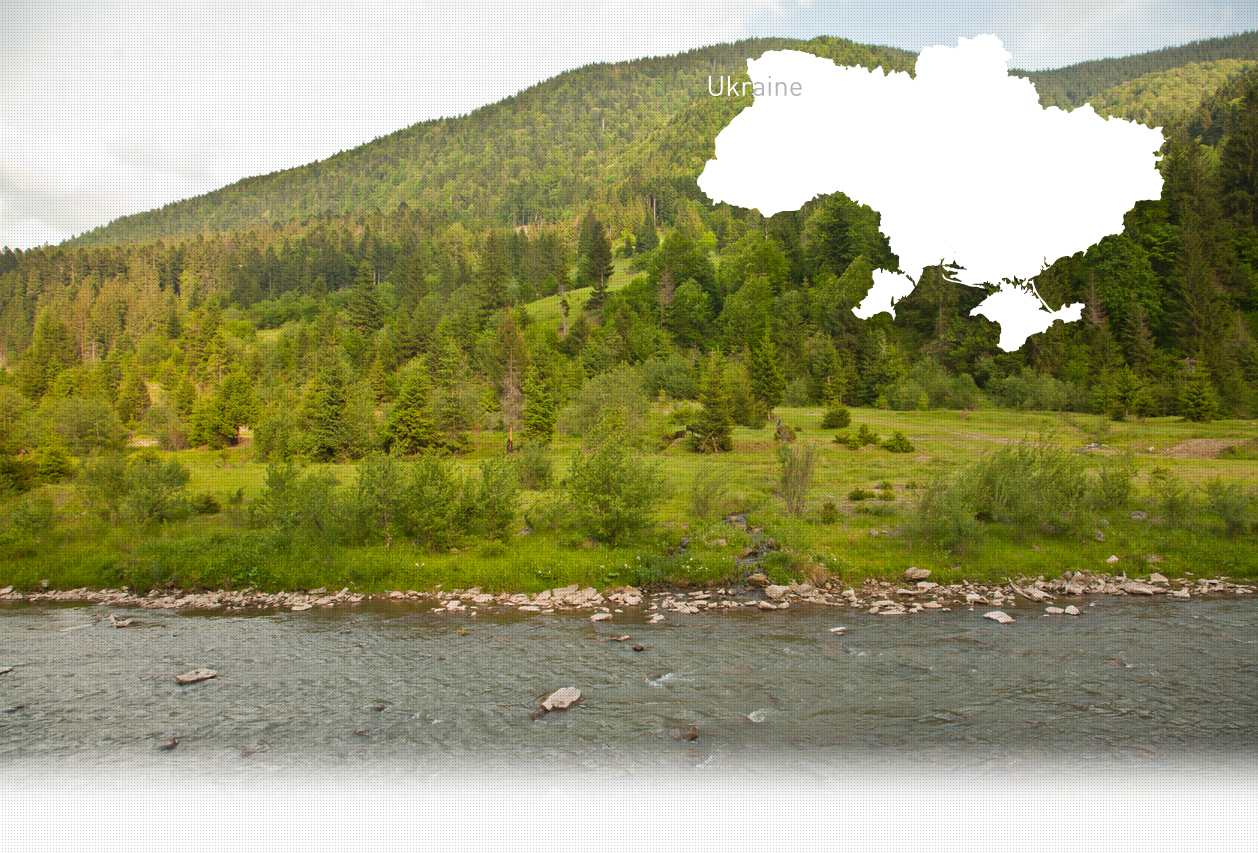
Dmytrivka (formerly Zmunchylove) is a village in southern Ukraine, located approximately 25 km (15 mi) southeast of Voznesensk.
Prior to the Second World War, the region formed part of the former Kherson Governorate of the Russian Empire and was later incorporated into the Ukrainian Soviet Socialist Republic. The broader area around Voznesensk included several small shtetls; however, the Jewish presence in Dmytrivka itself appears to have been limited in comparison with larger nearby centers such as Voznesensk.
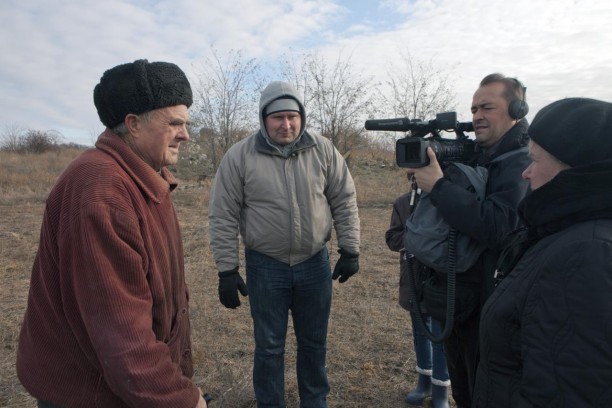
Imperial and Soviet census data do not identify Dmytrivka as a locality with a distinct or substantial Jewish population. While it remains plausible that a small number of Jewish families resided in the village—likely engaged in small trade or crafts such as tailoring or shoemaking—local witnesses interviewed by Yahad – In Unum do not recall a clearly established Jewish community prior to the war. Some suggested that one or two Jewish families may have lived there. Serhiy S., born in 1936, recalled in particular a Jewish shopkeeper named Avrum who lived in the center of the village.
Dmytrivka was occupied by German forces around mid-August 1941 and subsequently transferred to Romanian administration. Situated in the Voznesensk District, directly along the Southern Bug River—the frontier between the Romanian-administered Transnistria Governorate and the German-administered Reichskommissariat Ukraine—the village constituted a sensitive border zone that experienced the presence and operational coordination of both occupation authorities.
Archival documents indicate that in late December 1941, approximately 800 Jews from Odesa, primarily women and children, were deported by the Romanian Gendarmerie to Pokrovka and confined in the local hospital. Harsh conditions of detention reportedly led to the deaths of more than 200 deportees. The survivors were transferred to Dmytrivka in February or March 1942.
Upon arrival in Dmytrivka, the deported Jews were temporarily housed with local residents in order to warm themselves. A Yahad - In Unum witness, Kateryna V., born in 1925, recalled having taken in a young Jewish woman named Kima. According to her account, Kima and her mother had been marched from Odesa in a column that initially consisted of approximately 1,200 Jews, many of whom were killed along the way, including Kima’s mother.
Several days later, the Jews were removed from private homes and confined in village buildings, including a barn, a sheepfold, and the former school. They were held without heating and with insufficient food, which, according to Kateryna V., resulted in further deaths among the detainees. Despite prohibitions imposed by the guards, local residents clandestinely provided food to the Jews, sometimes in exchange for personal belongings.
According to witnesses interviewed by Yahad, the detainees were held for periods ranging from several days to approximately one month before being executed. Soviet archival sources date the Aktion to March 1942. The victims were taken to a ravine on a nearby hill, where they were shot in groups of five or six at a livestock (cattle) pit. Volodymyr V. testified: “The Jews were taken in groups to the cattle pit, placed at the edge, and shot with rifles. The bodies fell into the pit.”
Witnesses emphasized that the majority of the victims were women and children. Kateryna V. stated: “There were women with very young children, no one was spared.” The Aktion was carried out by German forces, with the participation of Romanian gendarmes and Ukrainian policemen. After the shootings, the bodies were burned and the pit was filled in.
To date, no memorial marks the site where approximately 600 Jews from Odesa were murdered.
For further information on the deportation and killing of Jews from Odesa in Pokrovka, please refer to the corresponding profile.
Do you have additional information regarding a village that you would like to share with Yahad ?
Please contact us at contact@yahadinunum.org
or by calling Yahad – In Unum at +33 (0) 1 53 20 13 17