
1 Sitio(s) de ejecución
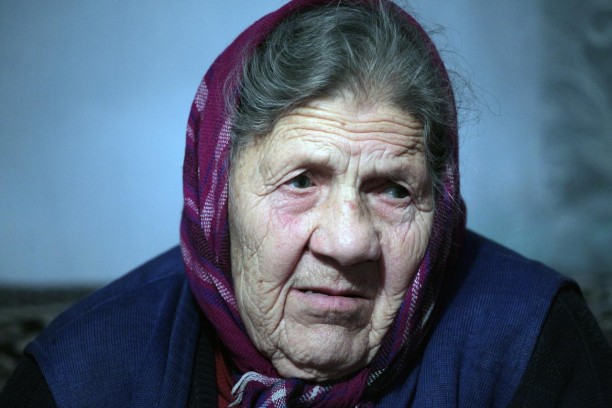
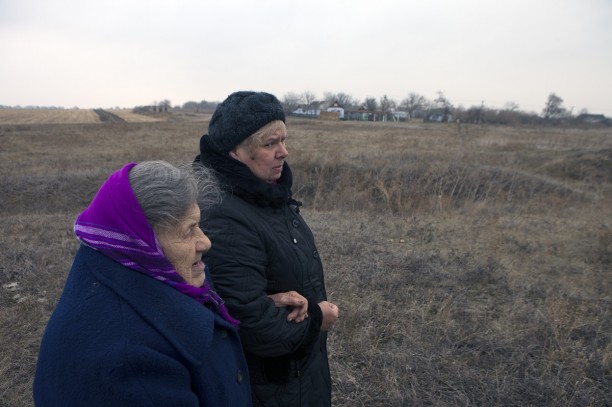
Liudmyla M., born in 1927: "The kolkhoz provided a cart to collect the bodies along the road before taking them to the nearest villages. In Bondarivka, there was a pit used for this purpose; it was a lime pit, and hemp was brought there to burn the bodies." (Testimony N°YIU1292U, interviewed in Bondarivka, on November 8, 2011)
Bondarivka is a village in the Mykolaiv Oblast, located 53 km (32 mi) from Voznesensk. From 1925 to 1939, the village was part of the Deutscher Kreis Karl-Liebknecht, which was established as part of the korenizatsiya (indigenization) policy.
There is no reliable prewar evidence of a Jewish presence in the village. In the district as a whole, the Jewish population was very small. According to the 1925 census, there were only 398 Jews living across 24 villages, comprising 1.5% of the total population.
Bondarivka was occupied by German troops in August 1941 and subsequently transferred under Romanian authority. A German Kommandantur was established in Rastatt (now Porichchya), and the Romanian gendarmerie was stationed in Mostove.
Since the village is located not far from the road leading from Odesa to Bohdanivka, columns of Jews from Odesa being transported to the Bohdanivka camp were regularly brought by the road near the village. According to Liudmyla, born in 1927, these columns were brought throughout the winter of 1941–1942. Those who could no longer continue due to fatigue or cold were shot along the road. Liudmyla saw these bodies lying there, without warm clothing; they were in a pitiful state, with black frostbite on their hands and feet.
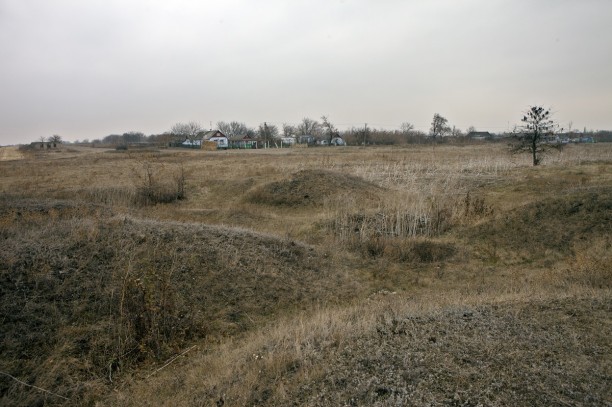
Carts and coachmen were requisitioned by the authorities to collect the victims' bodies, transport them to lime pits in the villages nearest to the road, and burn them. In Bondarivka, one such vapnyarka (lime pit) was located near the kolkhoz (collective farm) orchard. The bodies of several Jews who had died or were shot along the route were transported there, covered with hemp, and burned. No memorial marks the location of the pit.
¿Tiene información adicional con respecto a un pueblo que le gustaría compartir con Yahad?
Por favor contáctenos a contact@yahadinunum.org
o llamando a Yahad – In Unum at +33 (0) 1 53 20 13 17