


2 Sitio(s) de ejecución
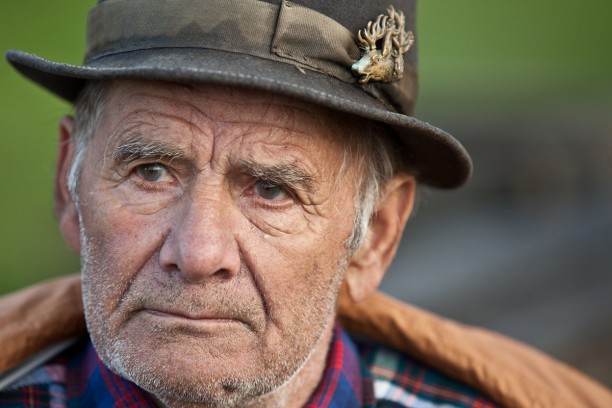
Vasyl B., born in 1927: "The Jewish community of Lopushne was quite large and relatively prosperous. The forests around the village, the sawmill, and a great deal of land belonged to them, as did most of the shops. Many Ukrainians worked for Jews: they took care of livestock and worked in the forests and in the fields. I also worked for a Jewish family, and sometimes I slept in their home.
On August 17 or 18, 1942, I was sleeping on the floor in that Jewish family’s house when the Hungarian soldiers arrived. They asked everyone present to show their identity papers and told the Jews under the age of sixty that they were going to be relocated elsewhere. They were told to take a few belongings and some food and to follow them. The soldiers went from house to house, and the column of Jews in the street grew larger and larger. All of these Jews were first locked inside the synagogue. I was able to go there to see ‘my’ Jewish family because I wanted to tell them that the Hungarian soldiers had taken their cows. The father of the family reassured me. He told me to tell the neighbor that she should continue to feed me and that he would pay her when he returned.
When I left the synagogue, a Hungarian soldier who had overheard our conversation came up to me and, laughing, told me that the Jews would never return." (Testimony N°YIU1496, interviewed in Lopushne, on May 23, 2012)
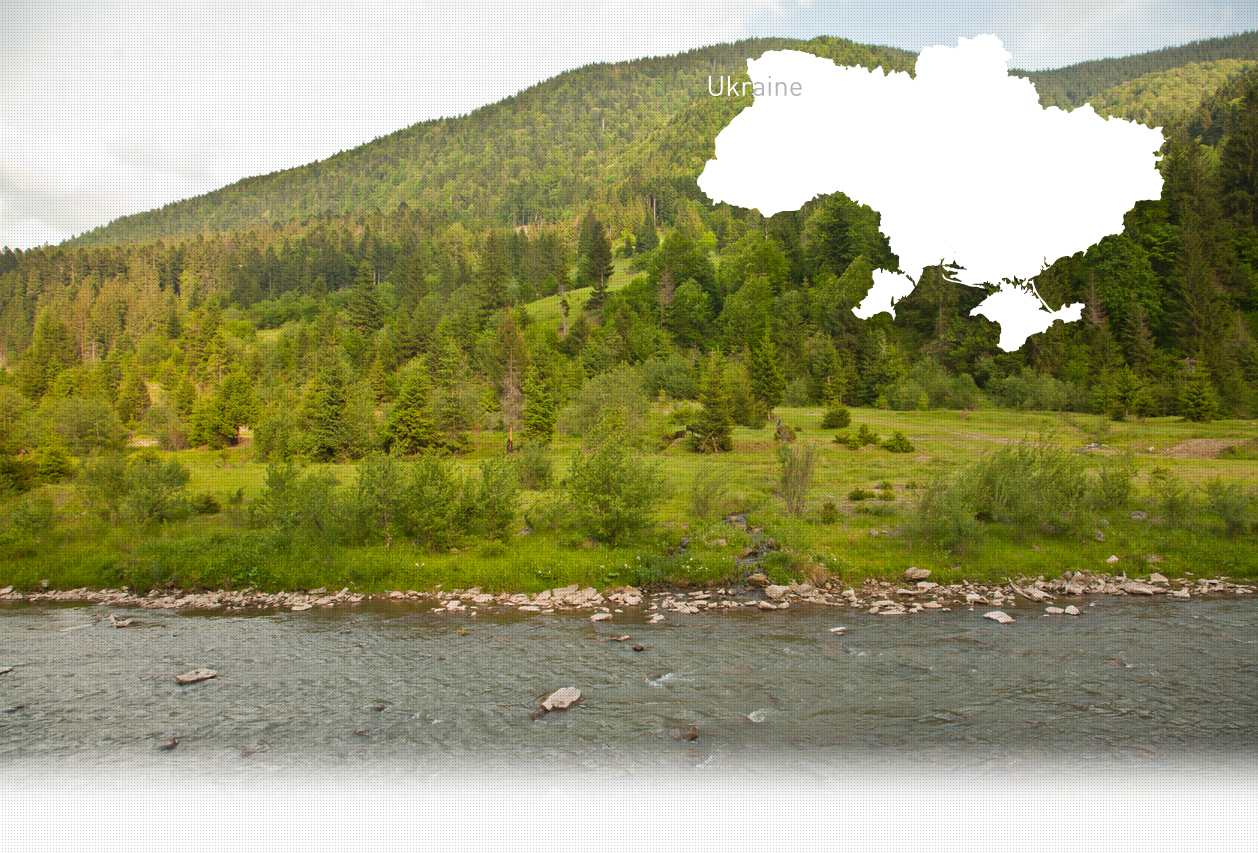
Lopushne is a village located in Transcarpathian region, approximately 80 km (52 mi) from the district center Khust. The settlement was first mentioned in historical sources in 1745, under the name Laposnya. Until the end of the First World War, Lopushne formed part of the Austro-Hungarian Empire, within the Hungarian administrative sphere. Following the collapse of the empire in 1918, the region experienced a series of political transformations. Parts of Transcarpathia were briefly claimed by the West Ukrainian People’s Republic, after which the territory was incorporated into Czechoslovakia between 1919 and 1938. In 1938–1939, amid the disintegration of Czechoslovakia, Hungarian forces occupied Transcarpathia, including the area encompassing Lopushne.
No known archival or published historical sources specifically document the existence of a Jewish community in Lopushne. Nevertheless, eyewitnesses interviewed by Yahad – In Unum consistently attest to the presence of a Jewish population in the village prior to the Second World War. According to these testimonies, Jewish families resided primarily in the central part of the village.
Oral accounts indicate that the principal economic activities of the Jewish inhabitants were related to commerce and landholding. Retail trade was conducted through small shops located in or adjacent to Jewish homes. Jewish traders were involved in the purchase of livestock from local Ukrainian peasants, which they then sold in nearby towns, particularly Khust, and some were engaged in the sale of alcohol. Testimonies further indicate that Jews owned forested land surrounding the village and supplied timber to the state. A sawmill in Lopushne was also reportedly under Jewish ownership. In addition, several Jewish residents were described as large landowners who employed local Ukrainian residents as agricultural laborers and shepherds. There was also a Jewish school in the village.
Witnesses uniformly recall that the Jews of Lopushne were religiously observant. They adhered to Shabbat, dietary kashrut laws, and circumcision, and were recognizable by their distinctive black clothing. A synagogue existed in the village; however, according to testimonies, the rabbi came from Torun, where a larger Jewish community was located. On Shabbat, Jewish residents reportedly asked Ukrainian children to perform prohibited tasks, such as lighting a fire or lightning a cigarette. Vasyl B., born in 1927, recalled: “I loved Shabbat very much. Jewish men asked me to light a cigarette, and in return they gave me a bun. At that time, we had only rye bread, and buns were a delicacy. That is why I loved Shabbat.”
The testimonies emphasize that interaction between the Jewish and Ukrainian populations was regular and multifaceted, encompassing economic cooperation, everyday social contact, and mutual dependency. These relationships formed an integral part of village life in Lopushne prior to the upheavals of the Second World War.
According to the recollections of witnesses interviewed by Yahad – In Unum, the local Jewish population did not evacuate and remained in the village at the outbreak of the war.
According to witness testimonies recorded by Yahad–In Unum, the arrival of Hungarian authorities, dated by Vasyl B. to March 9, 1939, marked a sharp deterioration in the situation of the Jewish population in Lopushne. Jewish-owned land, forests, and the sawmill were nationalized, depriving families of their livelihoods. Lopushne’s proximity to the German-occupied Ivano-Frankivsk region (less than 10 km away) shaped the policies of the Hungarian authorities and the forms of persecution imposed on the Jewish population.
Jewish life in Lopushne initially remained relatively calm, with synagogue attendance continuing for about a year, but the situation changed after Hungarian soldiers assaulted worshippers and forcibly cut the beards of Jewish men. Later, Jews were required to wear distinctive signs displaying a six-pointed yellow star. Non-compliance was punished by severe beatings or death.
On August 17 or 18, 1942, Hungarian authorities began mass arrests. Jews under sixty were taken from their homes and gathered in the synagogue overnight. The next day, some of these people were reportedly taken toward the border, while a smaller group was placed in the forced labor camp established in Lopushne, which operated for approximately two years. The camp, located in a sawmill on the Lopushne outskirts, housed young Jewish men who dug trenches to bury telephone cables over dozens of kilometers to Khust. Work was done by hand in teams of ten under armed supervision. The camp was guarded by four soldiers with dogs. Living conditions were harsh: Jews slept on the bare floor or outdoors, ate minimal rations. Those who died from starvation, cold, or exhaustion were buried on-site by fellow prisoners. Toward the end of the war, the remaining Jews from the camp were removed by Hungarian authorities to be sent elsewhere.
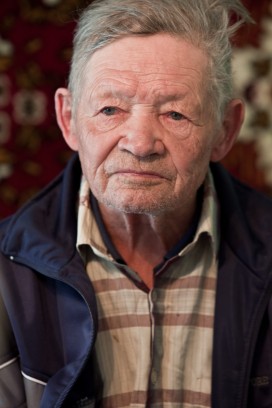
According to the testimony of local witness Fedir Sh., born in 1933, in 1942, a part of the local Jewish population was shot by Hungarian Gendarmes in the village of Lopushne itself. According to Fedir, the killings were carried out over several days. One day, he saw at least twenty local Jews, men and women, being led by Hungarian gendarmes to the outskirts of Lopushne, to a ravine at the foot of a hill, where they were shot without any pits being dug, directly into the bottom of the ravine, into a stream that flowed there. There is no memorial at the site.
The same year, some time after the shooting of the Jews in Lopushne, Fedir saw another group of twenty Jews being taken toward the border.
Following Germany’s invasion of Hungary in March 1944, the Hungarian Jews were concentrated in several ghettos across Transcarpathia before being deported to Auschwitz in the spring and early summer of 1944. In addition, numerous Jews from the surrounding area were progressively captured and escorted in columns through Lopushne toward the German occupation border via the Torun Pass, where a part of them were shot, while others were deported onward.
Vasyl B. recalled that in May 1944, the remaining elderly Jews, children, and a few young people who had been in hiding were arrested and taken from Lopushne. According to the recollections of Faia, a Jewish survivor from Lopushne who shared her memories with Vasyl B., the Jews of Lopushne were taken to Torun and confined in the synagogue, from where they were deported toward Odessa. However, the exact date of this deportation—whether in 1942 or 1944—could not be determined precisely.
For more information about the killings of Hungarian Jews in Torun, Torun Pass, and Vyshkiv, please follow the corresponding profiles.
¿Tiene información adicional con respecto a un pueblo que le gustaría compartir con Yahad?
Por favor contáctenos a contact@yahadinunum.org
o llamando a Yahad – In Unum at +33 (0) 1 53 20 13 17