
1 Killing site(s)
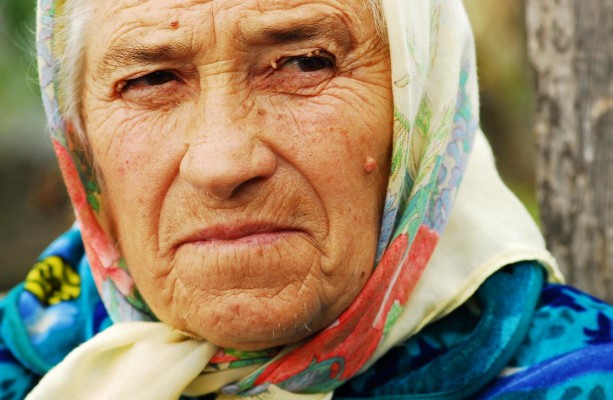
Anna P., born in 1935: "I saw the column of Jews being marched to [Novo]petrivka because they passed right in front of my house. They were guarded on all sides by German colonists. Along the way, the Jewish women were singing, and everyone could hear them. Fima, a 10-year-old Jewish boy who had been living in my house and whom we were caring for because he had frostbite on his feet, was also taken away alongside the other Jews. Since he could not walk, the people in the column carried him. The Jews were told they were being relocated to work on a kolkhoz, but it was a lie. They were shot there." (Witness N°1567, interviewed in Kudriavka, on August 12, 2012)
"[…] During the occupation of the Andreevo-Ivanovka district by Nazi invaders, on March 15, 1942, 150 Jewish civilians from the city of Odesa, including 90 children, were brought under escort to the village of N.-Petrovka [today Novopetrivka] by the Germans originating from Khristoforovo of the Blagoveschensky village council. They [the Jews] were locked in a barn. Subsequently, they were ordered to strip to their underwear and taken in groups outside of the village, 500m east, to a pre-prepared pit formed by a fascist bomb. Before the pit, after having been abused, they were shot. Among those shot were women, children, and the elderly. After the shooting, the Germans attempted to burn the bodies of those who had been shot ; they doused them with gasoline and set them on fire. The gasoline-drenched bodies burned for a full day. They were later covered with earth. […]" [Act No. 13 drawn up by the Extraordinary State Soviet Commission (ChGK) on September 28, 1944; Copy USHMM RG.22-002M, Reel 6 (30), p. 13]
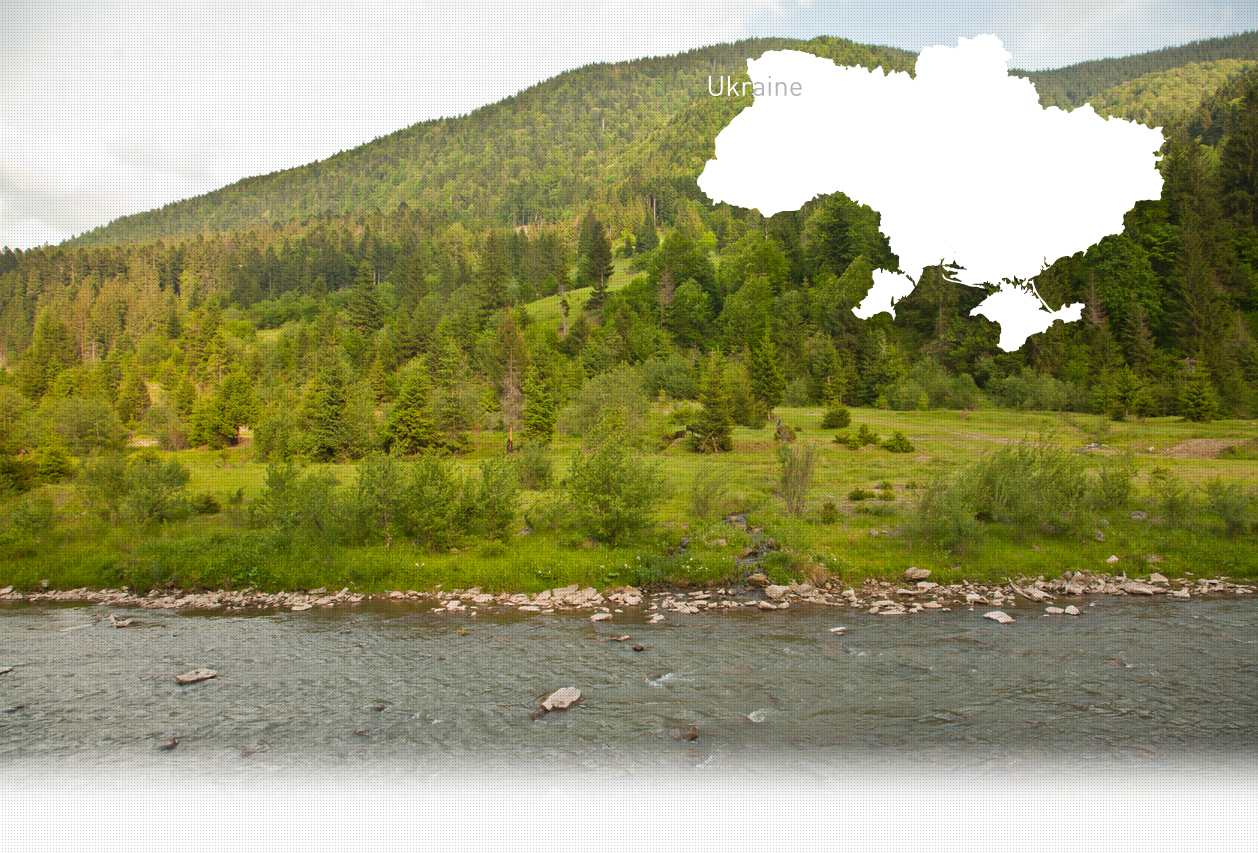
Novopetrivka lies approximately 128 km (79.5 mi) north of Odesa. The village is situated in the present-day Berezivka district of the Odesa Oblast which before WWII belonged to the Andreevo-Ivanovka district. Following the revolution, the region became part of the Ukrainian Soviet Socialist Republic. During the Soviet period, notably in the 1920s and 1930s, the area underwent significant agricultural development, leading to the re-organization of local settlements and the creation of collective farms (kolkhozes). The Berezivka district was therefore characterized by a significant presence of Jewish agricultural colonies alongside numerous ethnic German settlements inhabited by Volksdeutsche.
According to available sources, however, there were no Jewish residents living in Novopetrivka on the eve of the Second World War.
Novopetrivka, like the rest of the Berezivka district, was occupied by German troops in early August 1941 and, at the end of the same month, was transferred to the Romanian civilian administration as part of the Transnistria Governorate.
According to Anna P., born in 1935, who was interviewed by Yahad-In Unum in the nearby village of Kudriavka, a column of Jewish people was brought to the village in late winter or early spring and confined to a stable. The group included men, women, children, and the elderly. Although they were guarded by ethnic German colonists who prohibited local residents from approaching the building, some locals still managed to bring food to the detainees. At the same time, a Jewish boy named Fima, who had suffered frostbite on his feet, was sheltered along with a Jewish woman in Anna’s home, where they were cared for.
After approximately one week of confinement, on March 15, 1942, all the Jewish detainees, including those sheltered in Anna’s home, were taken to Novopetrivka under the false pretext of working on the kolkhoz. Upon their arrival, they were locked inside a barn, ordered to strip to their underwear, and led in groups outside the village to a pit created by a bomb explosion. There, they were shot by German colonists from Khristoforovo. Following the shooting, the victims’ bodies were doused with gasoline and burned, after which the pit was covered with earth.
According to Soviet archival information, a total of 150 Jewish people from Odesa, including 90 children, were killed in Novopetrivka. However, some documents within the archives estimate the number of victims to be 165.
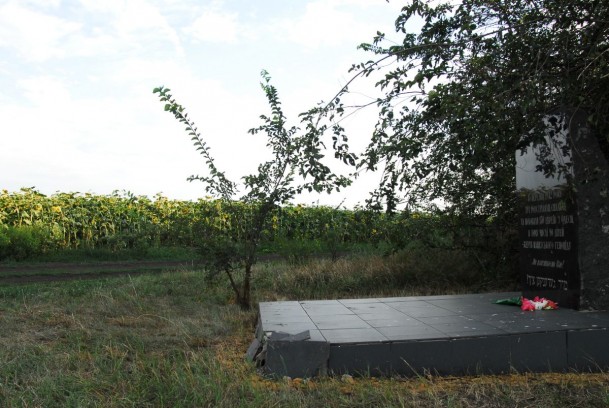
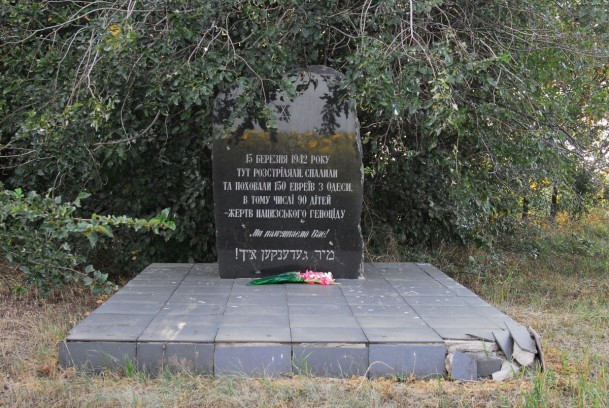
Today, a monument dedicated to the 150 Jewish people from Odesa stands at the killing site in Novopetrivka. However, according to a local resident who took an active role in the construction of the memorial, the monument is not placed at the exact location of the pit. The actual pit is located 50 meters south of the memorial.
Do you have additional information regarding a village that you would like to share with Yahad ?
Please contact us at contact@yahadinunum.org
or by calling Yahad – In Unum at +33 (0) 1 53 20 13 17